Overview
- The San people, often referred to historically as "Bushmen" (though "San" is preferred today), are one of the world's oldest indigenous groups.
- They have lived in southern Africa for tens of thousands of years, maintaining a lifestyle close to that of early humans.
- Some San communities continue to practice traditional hunting and gathering even today.
The San people are one of the Indigenous peoples of southern Africa. They primarily live in:
- Botswana
- Namibia
- South Africa
- Angola
- Zambia
- Zimbabwe
and neighboring regions.
The area around the:
Kalahari Desert
is especially well known as one of the traditional homelands of many San communities.
The San are considered one of the oldest Indigenous population groups in southern Africa and have attracted significant attention in the fields of anthropology, archaeology, and genetics.
The term "San" is a collective name that refers to several related groups. Within the broader San population, there are diverse communities with different languages, cultural traditions, and histories.
Linguistically, many San languages are often associated with what are commonly called:
Khoisan languages
These languages are widely known for their use of:
Click consonants
which are produced by creating suction sounds within the mouth.
However, not all San languages belong to the same linguistic family, and their classification remains an active area of research.
Traditionally, many San communities practiced a hunter-gatherer way of life.
Their activities included:
- Hunting wild animals
- Gathering fruits, roots, and other edible plants
- Locating and managing scarce water resources
The San developed extensive knowledge of the natural environment, including plants, animals, and survival techniques in arid regions. This traditional ecological knowledge continues to be of interest to researchers today.
San societies were traditionally organized into small community groups. Cooperation, resource sharing, and social equality often played important roles in daily life.
In terms of religion and spirituality, traditional San beliefs have emphasized relationships with nature, animals, ancestors, and spiritual forces.
Ceremonies involving:
- Dance
- Singing
- Healing rituals
have long been important aspects of San cultural life.
The San are also well known for their rock art traditions.
Across parts of South Africa, Namibia, Botswana, and neighboring regions, numerous rock paintings and rock engravings have been discovered. These artworks often depict:
- Animals
- Hunting scenes
- Ceremonies
- Daily life
and are considered valuable sources of information about the prehistoric cultures of southern Africa.
During the modern era, San communities experienced major changes due to state formation, land policies, conservation programs, and the establishment of protected areas.
As a result, many San people were displaced from traditional territories and faced significant social and economic challenges.
Today, many San communities live in settled villages and towns, while efforts continue to preserve traditional knowledge and cultural practices.
Various initiatives related to:
- Land rights
- Educational opportunities
- Language preservation
- Indigenous rights
have also become increasingly important.
Today, the San are recognized as one of the representative Indigenous peoples of southern Africa, and their hunter-gatherer traditions, click languages, rock art, and environmental knowledge continue to represent an important part of humanity’s cultural diversity.
Location
- Found mainly in Namibia, Botswana, South Africa, Angola, and Zimbabwe.
- Concentrated particularly around the Kalahari Desert region.
Region
Continent: Africa
History
- The San are among the earliest inhabitants of southern Africa, dating back to the Stone Age.
- Around 2,000 years ago, the arrival of Bantu-speaking pastoralists led to the gradual loss of San territories.
- During colonial times, the San faced severe displacement and marginalization.
- Efforts to reclaim land rights continue into the modern era.
Culture
- Hunter-Gatherers:Skilled in hunting with bows and gathering wild plants.
- Click Languages:Unique use of click consonants in speech.
- Spiritual Beliefs:Animistic faith centered around nature spirits; known for trance healing dances.
- Rock Art:Ancient paintings depicting animals and hunting scenes.
- Small-Scale Bands:Nomadic groups of a few dozen individuals.
San Symbols and Flag
No official national flag
but symbolic motifs includ
- Bow and Arrow:Survival and hunting.
- Animal Tracks:Connection to nature.
- Spiritual Dances:Sometimes depicted in symbolic artwork.
Language
San languages fall within the broader Khoisan language family.
San Language Features
Features
- Use of click consonants (|, ǀ, ǃ, ǂ, ǁ) not found in most other languages.
- Flexible word order and rich verbal morphology.
Main San languages include
- Juǀʼhoan
- !Kung
- Nǁng, among others.
Linguistic Characteristics and Writing System of Juǀ’hoan
Language Classification and Historical Background
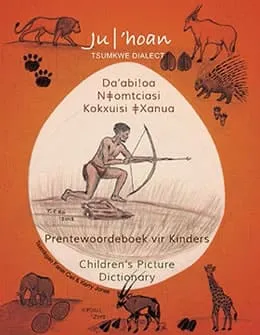
Juǀ’hoan is spoken by the San people (also known as Bushmen) in northwestern Botswana and northeastern Namibia. Previously grouped broadly under the Khoisan languages due to their characteristic click consonants, Juǀ’hoan belongs specifically to the Northern Khoisan language cluster, Ju-ǃKung. Recent research reclassifies Juǀ’hoan under the Kx’a language family. Considered one of the oldest linguistic groups in Africa, the Juǀ’hoan speakers number a few thousand, facing marginalization and minimal educational support in Botswana.
Phonetic Features
Juǀ’hoan is distinguished by its extensive use of click consonants, such as dental "ǀ," lateral "ǁ," alveolar "ǃ," and palatal "ǂ," each with voiced, voiceless, and ejective variations. The language also features vowel distinctions based on length, nasalization, glottalization, whisper phonation, and a four-level tonal system, creating a highly complex phonological inventory.
Writing System
Juǀ’hoan traditionally had no writing system until a Latin-based orthography was developed in the 1970s. A practical and standardized writing system was formalized in Namibia in the 1990s through collaboration between linguist Patrick Dickens and the Juǀ’hoan community. Click sounds are represented by unique symbols (ǀ, ǁ, ǃ, ǂ) with special fonts required for digital rendering.
An example of the written Juǀ’hoan language includes children's multilingual picture dictionaries and storybooks, demonstrating the use of special symbols and Latin characters.
Sources (International Databases)
- repository.kulib.kyoto-u.ac.jp repository.kulib.kyoto-u.ac.jp
- en.wikipedia.org en.wikipedia.org
- peoplesoftheworld.org peoplesoftheworld.org
- endangeredlanguages.com endangeredlanguages.com
- peoplesoftheworld.org peoplesoftheworld.org
- peacefulsocieties.uncg.edu peacefulsocieties.uncg.edu
San People and Phrases
| English | San Language Example (Juǀʼhoan) | Pronunciation |
| Hello | ǃNara | Nara |
|---|---|---|
| Good morning | ǀUi | Wi |
| Thank you | ǂKhom | Kom |
| Nice to meet you | ǁGae | Gae |
| Good night | ǃOa | Oa |
| Delicious | !Gum | Gum |
| Fun/Enjoyable | ǀGoro | Goro |
Notes
- Ntxoov zoo can mean both "hello" and "how are you?"
Language Origins
- Khoisan languages are believed to be among the oldest language families in human history.
- Genetic studies show the San people retain some of the oldest human DNA lineages.
- Click sounds may have offered advantages for hunting and stealth communication.
Writing System
- Traditionally oral: writing was not historically used.
- Modern writing employs Latin script, with special symbols for clicks.
- Clicks are represented with unique characters like | ǀ ǃ ǂ ǁ.
Detailed Habitat
- Botswana:Central Kalahari region.
- Namibia:Northern and eastern areas.
- South Africa: Northern Cape province.
- Zimbabwe and Angola:Smaller communities.
Access Guide
The currency of the San people is the Botswana Pula (BWP).
0.065 EUR / 0.075 USD / 10.73 JPY / 0.54 CNY / 0.12 AUD / 0.096 SGD / 0.59 HKD / 0.055 GBP / 6.43 INR
San Region
Access to San Region (Namibia/Botswana) from Major Cities
| Departure City | Direct/Transit | Arrival Airport | Flight Time (approx.) | Reference Fare (one-way/round-trip, Economy) |
| Los Angeles | LA → Europe/Middle East → Windhoek | Windhoek Int'l (WDH) | 22–30 hours | US$1,300–2,200 |
|---|---|---|---|---|
| New York | NY → Europe/Middle East → Windhoek | Windhoek Int'l (WDH) | 21–29 hours | US$1,200–2,000 |
| London | London → Johannesburg → Windhoek | Windhoek Int'l (WDH) | 14–19 hours | £750–1,300 |
| Tokyo | Tokyo → Middle East/Europe → Windhoek | Windhoek Int'l (WDH) | 23–32 hours | ¥190,000–320,000 |
| Sydney | Sydney → Johannesburg → Windhoek | Windhoek Int'l (WDH) | 23–32 hours | A$1,900–3,100 |
| Hong Kong | Hong Kong → Johannesburg → Windhoek | Windhoek Int'l (WDH) | 21–28 hours | HK$9,500–15,000 |
| Shanghai | Shanghai → Johannesburg → Windhoek | Windhoek Int'l (WDH) | 22–29 hours | CNY8,800–14,000 |
| Singapore | Singapore → Johannesburg → Windhoek | Windhoek Int'l (WDH) | 20–28 hours | S$1,400–2,300 |
Traditional San (Juǀ’hoansi) Games
Children's Hunting Play
Among the Juǀ’hoansi San, children learn life skills through hunting play, crafting small bows, arrows, and slingshots to hunt birds and small animals. Girls mimic gathering practices using small baskets. This type of play emphasizes cooperative learning rather than competitive outcomes, aligning with the egalitarian and non-competitive cultural values of the San community. Adults rarely interfere directly, and older children teach younger ones through imitation and collaborative play.
Musical and Dance
Music and rhythm-based games hold significant social value. Community members gather at dusk, singing and dancing together, reinforcing social cohesion. Traditional trance dances performed by adults are also imitated by children, bridging daily life with ceremonial practices.
Prominent traditional games include rope-skipping, melon games, and "war games," each accompanied by distinct songs. The war game (n!àì) involves teams performing rhythmic songs and gesture-based mime competitions, emphasizing timing and improvisational skills. Originating from ceremonial "porcupine games" associated with successful hunts, the war game evolved into a non-exclusive, everyday entertainment, reflecting the adaptation of traditional practices due to modern restrictions on hunting.
San (Juǀ’hoansi) games thus serve dual purposes: children's learning and adult social rituals, preserving cultural heritage and values across generations.
References Academic and ethnographic sources on Juǀ’hoan language classification, phonetics, orthography, children's play among the San, traditional games, and associated music and cultural meanings.
1.Bow and Arrow Play
Children practice hunting skills using small bows.
2.Tracking Games
Following animal tracks in playful competitions.
3.Spirit Dance Imitation
Children mimic adult healing dances for fun.
Introduction video
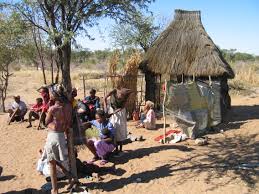
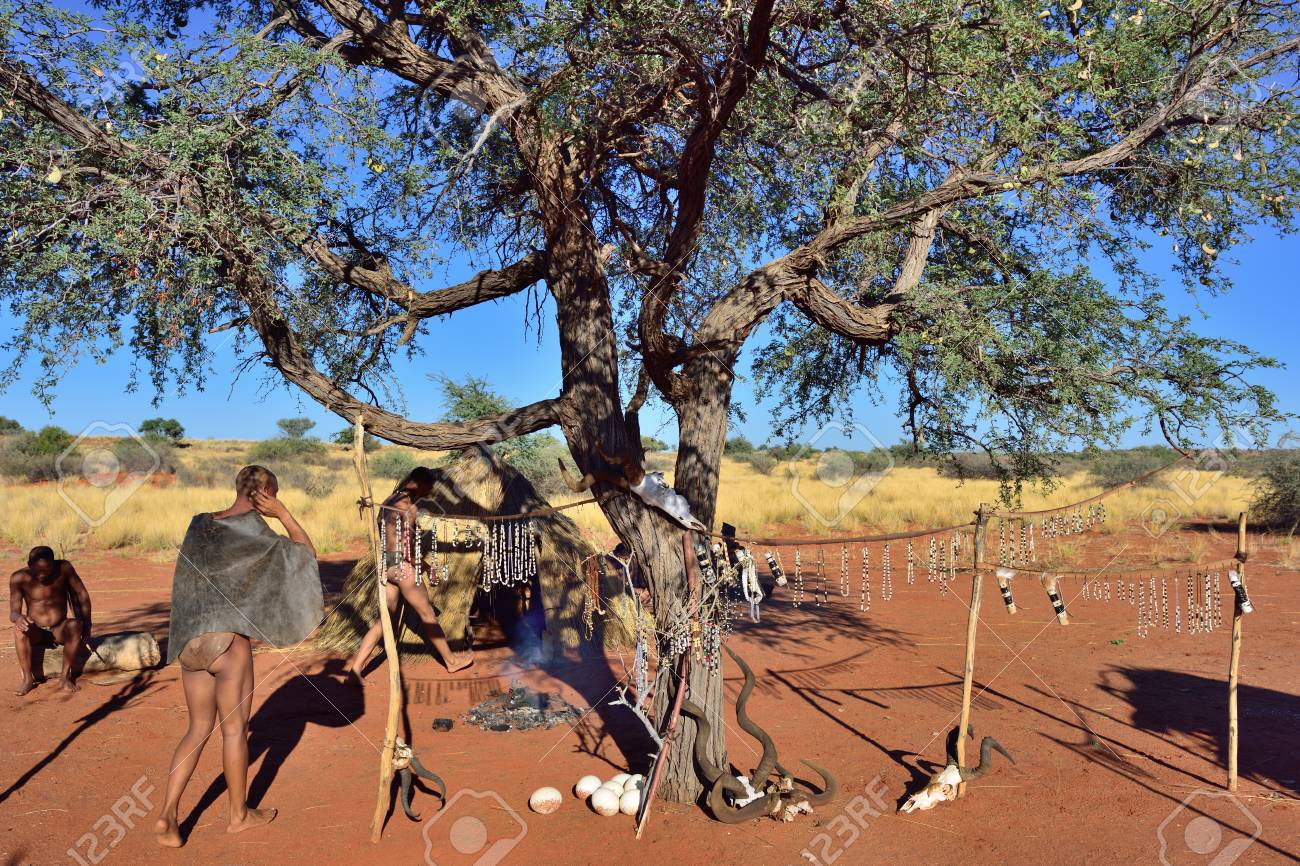
The San people's culture, language, and way of life offer a profound glimpse into the resilience and adaptability of humanity's ancient roots.
Sources (International Databases)
- researchgate.net researchgate.net
- peacefulsocieties.uncg.edupeacefulsocieties.uncg.edu
- link.springer.com link.springer.com
- greengirlsinafrica.com greengirlsinafrica.com
- repository.kulib.kyoto-u.ac.jprepository.kulib.kyoto-u.ac.jp
- collections.peabody.harvard.ed collections.peabody.harvard.edu