Overview
- The Zulu are one of the largest ethnic groups in Southern Africa, primarily residing in South Africa.
- They are part of the Bantu linguistic and cultural family and are known for their rich heritage of warrior tradition, oral poetry and ceremonial dance.
- The name “Zulu” is derived from iZulu, meaning “heaven” or “sky.”
The Zulu people are one of the major ethnic groups of South Africa. They primarily live in:
- KwaZulu-Natal
- Gauteng
- Mpumalanga
and other regions of the country.
The Zulu are considered one of the largest ethnic groups in South Africa, with a population numbering in the millions.
Their language is:
isiZulu (Zulu language)
which belongs to the Bantu branch of the Niger-Congo language family.
isiZulu is one of the official languages of South Africa and is among the most widely spoken languages in the country.
The Zulu people are believed to have emerged as part of the broader Bantu migrations into southern Africa. During the late 18th and early 19th centuries, they developed into a major political power in eastern South Africa.
One of the most important figures in Zulu history is:
Shaka Zulu
who is known for his role in the formation and expansion of the Zulu Kingdom.
During Shaka’s leadership, military organization and systems of governance were strengthened, and the Zulu Kingdom became a significant regional power.
In the 19th century, the Zulu Kingdom came into conflict with the British Empire during:
The Anglo-Zulu War
The Battle of Isandlwana in 1879 is particularly well known because Zulu forces achieved a major victory against the British army.Traditional Zulu society was based largely on agriculture and cattle raising. Cattle held important economic and social value and played significant roles in marriage customs and community life.
Family and kinship ties have traditionally been central to Zulu society, and systems of chieftaincy and kingship continue to hold cultural significance today.
In terms of religion, many Zulu people today practice Christianity, while elements of traditional beliefs, including respect for ancestors, continue to play important roles in cultural life.
The Zulu are also widely known for their music and dance traditions.
Traditional ceremonies and festivals often feature:
- Choral singing
- Drumming
- Dance performances
which remain important aspects of cultural expression.
The Zulu are also known for their craftsmanship, including beadwork and traditional clothing, both of which continue to play important roles in cultural identity.
Today, many Zulu people live in urban areas and participate in fields such as education, politics, arts, sports, and business.
At the same time, challenges related to language preservation, cultural continuity, and economic inequality remain important issues for many communities.
Today, the Zulu are recognized as one of the most influential ethnic groups in South Africa, and their language, history, kingdom traditions, music, and community culture continue to represent an important part of the cultural diversity of southern Africa.
Location
- Mainly located in KwaZulu-Natal Province in South Africa.
- Also present in parts of Mozambique and Eswatini (Swaziland).
- Many Zulu have migrated to urban centers like Johannesburg and Durban.
Region
Continent:Africa
History
- In the early 1800s, King Shaka Zulu united various Nguni clans into a powerful Zulu Kingdom.
- Shaka revolutionized military tactics and expanded the kingdom’s territory.
- The Anglo-Zulu War of 1879 featured both Zulu victories and eventual British colonization.
- Today, the Zulu monarchy remains a symbolic cultural institution within South Africa.
Culture
- Warrior Heritage:Spears (assegai), shields, and military regalia are symbolic.
- Traditional Dance (Indlamu):High-kicking dance performed at weddings, rituals, and festivals.
- Beadwork:Colorful bead patterns convey messages about age, marital status, and social ties.
- Ubuntu Philosophy:Emphasis on community, mutual respect, and ancestral connection.
Zulu Symbols and Flag
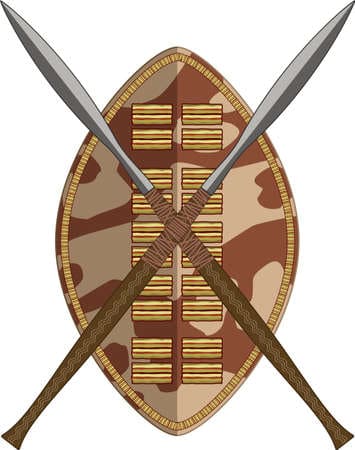
No official ethnic flag, but the Zulu Kingdom historically used
- Cowhide shields and assegai spears.
- Symbolic black-and-white patterns representing different Zulu regiments.
Modern symbols include
Royal crests, Zulu traditional attire, and beadwork patterns.
Language
- Zulu language (isiZulu) is part of the Bantu family under the Niger-Congo language group.
- Spoken by over 12 million people in Southern Africa.
Features
- Incorporates click consonants influenced by Khoisan languages.
- Extensive noun class system.
- Intelligible to speakers of Xhosa, Swati, and other Nguni languages.
Common Zulu Greetings and Phrases
| English | Zulu (isiZulu) | Pronunciation |
| Hello | Sawubona | sah-woo-boh-nah |
|---|---|---|
| Good morning | Sawubona ekuseni | sah-woo-boh-nah eh-koo-seh-nee |
| Good night | Ulale kahle | oo-lah-leh kah-hleh |
| Thank you | Ngiyabonga | ngee-yah-bong-gah |
| Nice to meet you | Ngiyajabula ukukwazi | ngee-yah-jah-boo-lah oo-kook-wah-zee |
| Delicious | Kumnandi | koom-nahn-dee |
| Fun/Enjoyable | Kuyajabulisa | koo-yah-jah-boo-lee-sah |
Language Origins
- Zulu evolved from Nguni dialects of the Bantu-speaking peoples.
- Influenced by Khoisan languages, especially in click sounds.
- Written Zulu began in the 1800s via missionary work and expanded through education and print.
Writing System
- Written using the Latin alphabet, formalized by Christian missionaries in the 19th century.
- Zulu is one of South Africa’s 11 official languages.
- Widely used in education, literature, media, and government.
Detailed Habitat
・KwaZulu-Natal is the heartland of Zulu culture.
・Large Zulu communities exist in
・Gauteng Province (urban centers like Johannesburg)
・Parts of Mpumalanga, Eastern Cape, and Free State.
Access Guide
The currency of the Zulu people is the South African Rand (ZAR).
0.048 EUR / 0.056 USD / 7.99 JPY / 0.4 CNY / 0.086 AUD / 0.071 SGD / 0.44 HKD / 0.041 GBP / 4.79 INR
https://www.xe.com/currencyconverter/
Access to Zulu Region (Durban, South Africa) from Major Cities
| Departure City | Direct/Transit | Arrival Airport | Flight Time (approx.) | Reference Fare (one-way/round-trip, Economy) |
| Los Angeles | LA → Europe/Middle East → Johannesburg → Durban | King Shaka Int’l (DUR) | 24–34 hours | US$1,200–2,100 |
|---|---|---|---|---|
| New York | NY → Europe/Middle East → Johannesburg → Durban | King Shaka Int’l (DUR) | 21–32 hours | US$1,100–1,9000 |
| London | London → Johannesburg → Durban | King Shaka Int’l (DUR) | 16–20 hours | £750–1,300 |
| Tokyo | Tokyo → Middle East/Europe → Johannesburg → Durban | King Shaka Int’l (DUR) | 22–32 hours | ¥190,000–310,000 |
| Sydney | Sydney → Johannesburg → Durban | King Shaka Int’l (DUR) | 18–27 hours | A$1,600–2,800 |
| Hong Kong | Hong Kong → Johannesburg → Durban | King Shaka Int’l (DUR) | 20–28 hours | HK$8,800–15,000 |
| Shanghai | Shanghai → Johannesburg → Durban | King Shaka Int’l (DUR) | 21–29 hours | CNY7,800–13,500 |
| Singapore | Singapore → Johannesburg → Durban | King Shaka Int’l (DUR) | 19–27 hours | S$1,400–2,400 |
Traditional Games of the Zulu People
1.Morabaraba
A strategy board game similar to Nine Men’s Morris.
2.Stick Fighting (Induku)
Cultural martial art used to train young men.
3.Bead Tossing Games
Aiming games played by children using beads or pebbles.
4.Dance Battles
High-energy dance competitions featuring stamping, kicks, and chants.
Introduction video
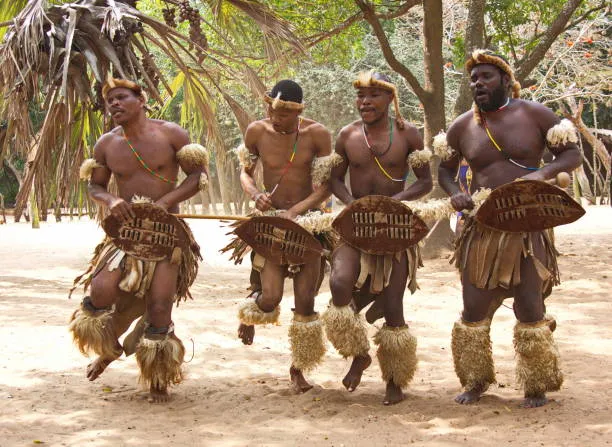
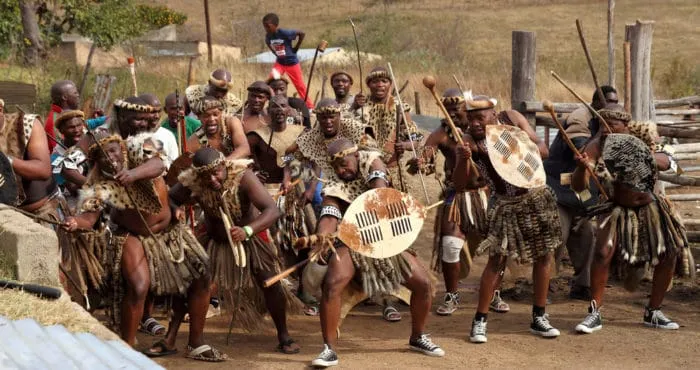
The Zulu people embody strength, rhythm, community, and storytelling—a living culture of dignity, pride, and vibrant expression.