Who are the Karen people?
The Karen peoples have diverse languages and cultural traditions, with communities in Myanmar and Thailand as well as overseas. In Myanmar, the name Kayin is also used. Their lives extend beyond the familiar image of a highland village.[1][19]
Research on Sgaw Karen includes speakers in southwestern Myanmar, the Myanmar–Thailand border region and northern Thailand, alongside overseas communities.[2]
Language families and ethnic identities
The Karenic languages form a group within the Sino-Tibetan family. A linguistic classification does not, by itself, determine how people identify ethnically.[3]
For example, the language listed as Pa’o Karen in linguistic catalogues is spoken by people whom UNFPA describes as the Pa-O ethnic group. KOM also distinguishes Karen and Karenni in its community information. This article focuses mainly on Sgaw and Pwo, while introducing Pa’o as a related language.[4][19]
Ethnic population and language-speaker population are different measures. Estimates from different years, countries and definitions should not be added together as a single current total.
Is Karen one language?
A resource labelled simply “Karen” may not tell you which language or variety it teaches. The Karen Organization of Minnesota (KOM) introduces Sgaw and Pwo, and notes that Sgaw is the most widely used variety in Minnesota’s Karen community. Its cultural guide also distinguishes Eastern and Western Pwo.[1][6]
| Language or group | A useful distinction | When learning |
|---|---|---|
| Sgaw Karen / S’gaw | Spoken in Myanmar, Thailand and overseas, with regional variation. | Check the variety and spelling system used by the resource. |
| Pwo Karen languages | Eastern and Western Pwo are distinguished; writing traditions also vary. | Do not assume every Pwo expression is shared across communities. |
| Pa’o | A related Karenic language associated with the Pa-O people. | Do not present Sgaw or Pwo phrases as Pa’o. |
The distinctions above draw on language catalogues, Sgaw research and studies of Karen writing systems.[2][3][7]
Sgaw sounds and grammar
Kerbs’s 2025 study examines data from Mawchi–Taungoo, Kayin–Tak and northern Thailand. It identifies five tones in the varieties investigated.[2] Kato’s analysis of the Hpa-an variety describes six. The variety and analytical framework matter when comparing tone counts.[7]
Sgaw has a basic subject–verb–object (SVO) order, familiar from English. It is largely isolating: grammatical relationships rely heavily on word order and separate words, with little inflection. Classifiers and sentence-final particles are among the features examined in modern research.[2]
A few expressions to start with
The following short examples follow KOM’s phrase guide. Its spellings are a practical romanization, not a complete phonetic or tonal transcription.[5] For pronunciation practice and a guide explicitly identified as Sgaw, KOM’s resources page also links to audio-supported materials.[6]
| English meaning | Romanization in the guide |
|---|---|
| Good morning | Ghaw luh a ghay |
| Good afternoon | Nee luh a ghay |
| Thank you very much | Ta bluh doh mah |
| Delicious | Wee doh mah |
These examples are not a phrasebook for every Karenic language. When speaking with someone, ask which language they use and follow a resource for that language.
More than one Karen writing system
Kato’s research describes Karen scripts that vary by language, region and religious tradition.[7]
| Writing tradition | Historical context |
|---|---|
| Sgaw Karen script | A Myanmar-derived system developed by Jonathan Wade in the 1830s. |
| Buddhist Pwo script | Attributed to Karen monks, probably between the late eighteenth and early nineteenth centuries; commonly called Eastern Pwo script. |
| Christian Pwo script | Developed by Baptist missionaries in the 1840s; commonly called Western Pwo script. |
| Letalanyah | A Buddhist Sgaw writing system, tentatively dated to around 1960. |
| Leke | An Eastern Pwo system associated with Leke religious practice, dated to the 1840s. |
Kato also describes Roman-alphabet Sgaw among Thai Catholics and argues that Lekwaikaw reflects modern, rather than ancient, phonology.[7]
Pa’o also has written materials. The Unicode Myanmar Extended-A chart includes a Pa’o tone mark, U+AA7B. It is therefore misleading to describe Pa’o simply as having no writing system.[8]
View writing-system images retained from the earlier article
The original sources, dates and precise orthographic varieties of these images have not been established. Use the linked language resources to study spelling and pronunciation.


Food, textiles and everyday life
Rice and shared dishes
KOM describes meals shared with family, friends or neighbours, with rice accompanied by smaller dishes of vegetables, fish or meat. Examples include squash, bamboo shoots, cucumbers, mushrooms and eggplants. Fermented fish paste adds flavour alongside rice and vegetables; seasonings may include chilli, ginger, turmeric, garlic, tamarind and lime. These examples introduce a food tradition without defining a menu for every household.[9]
Weaving as a living practice
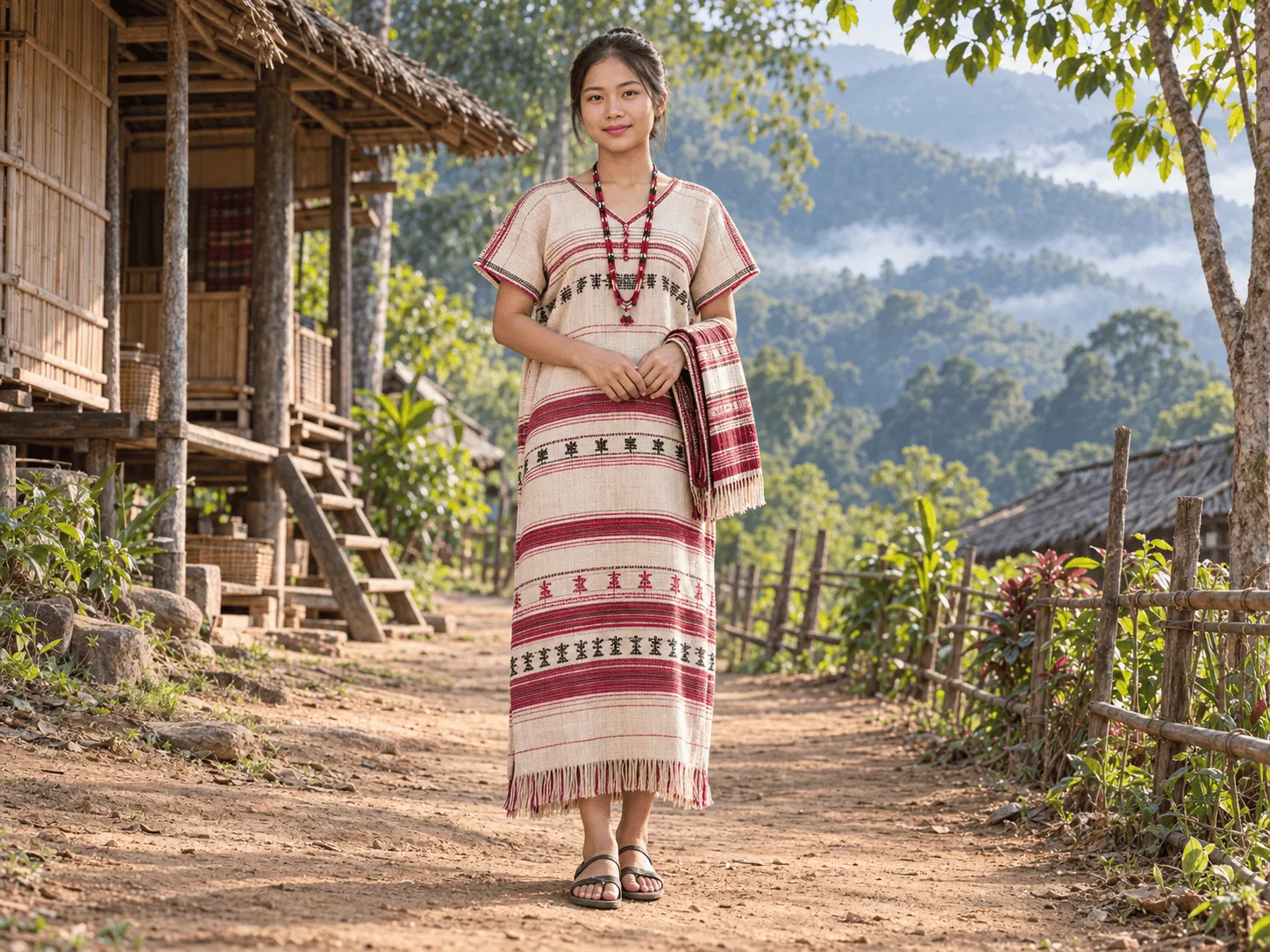
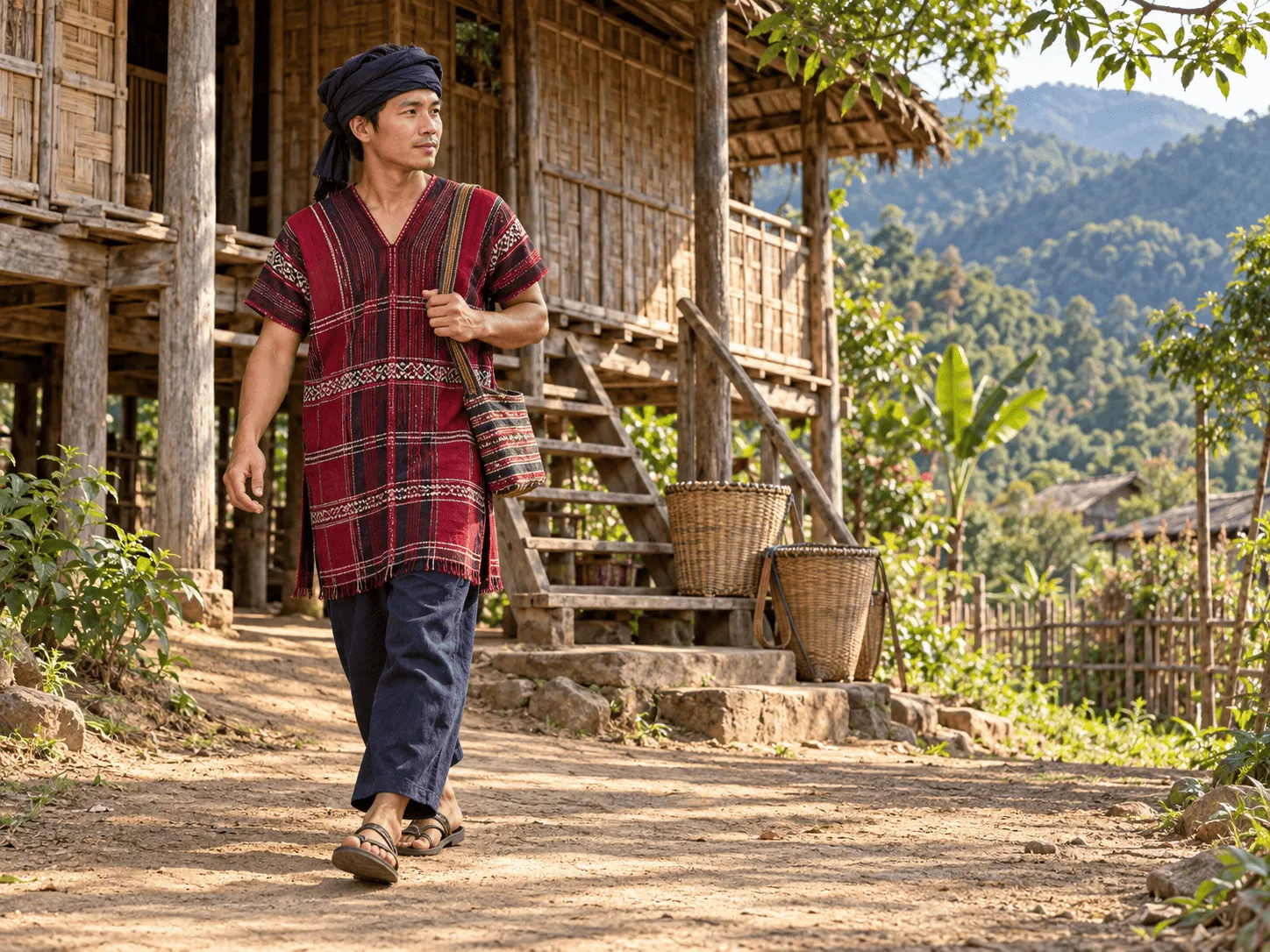
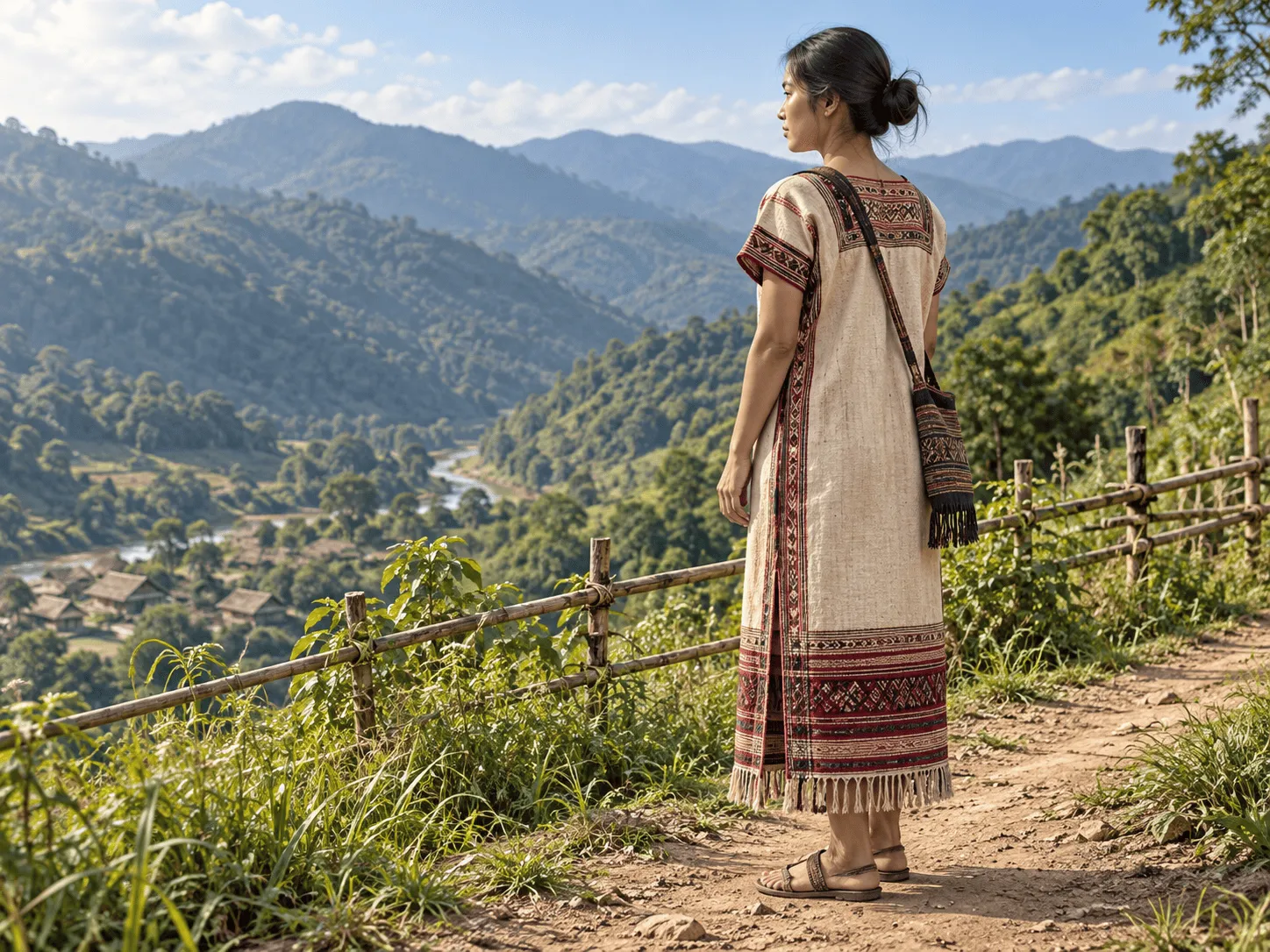
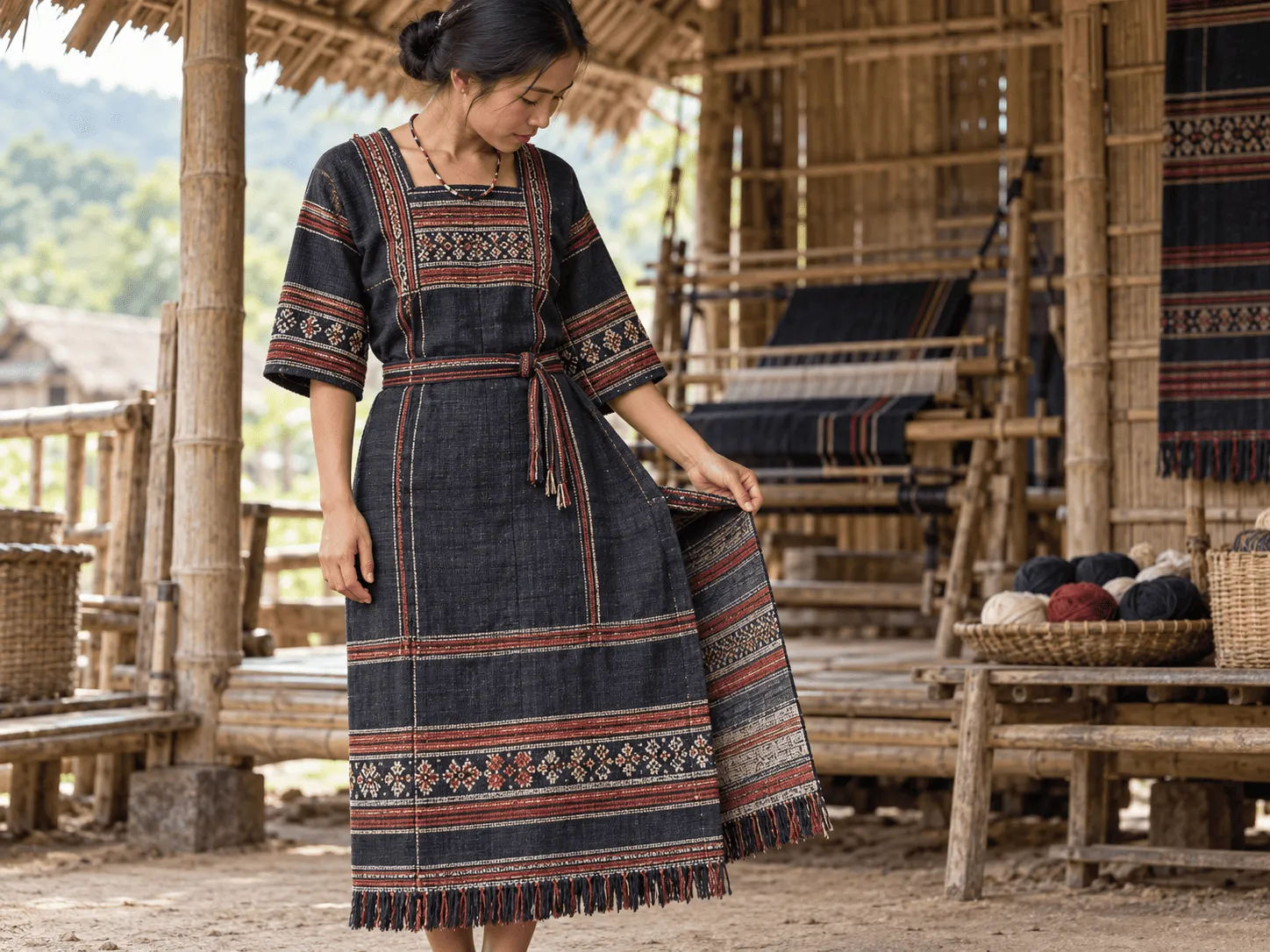
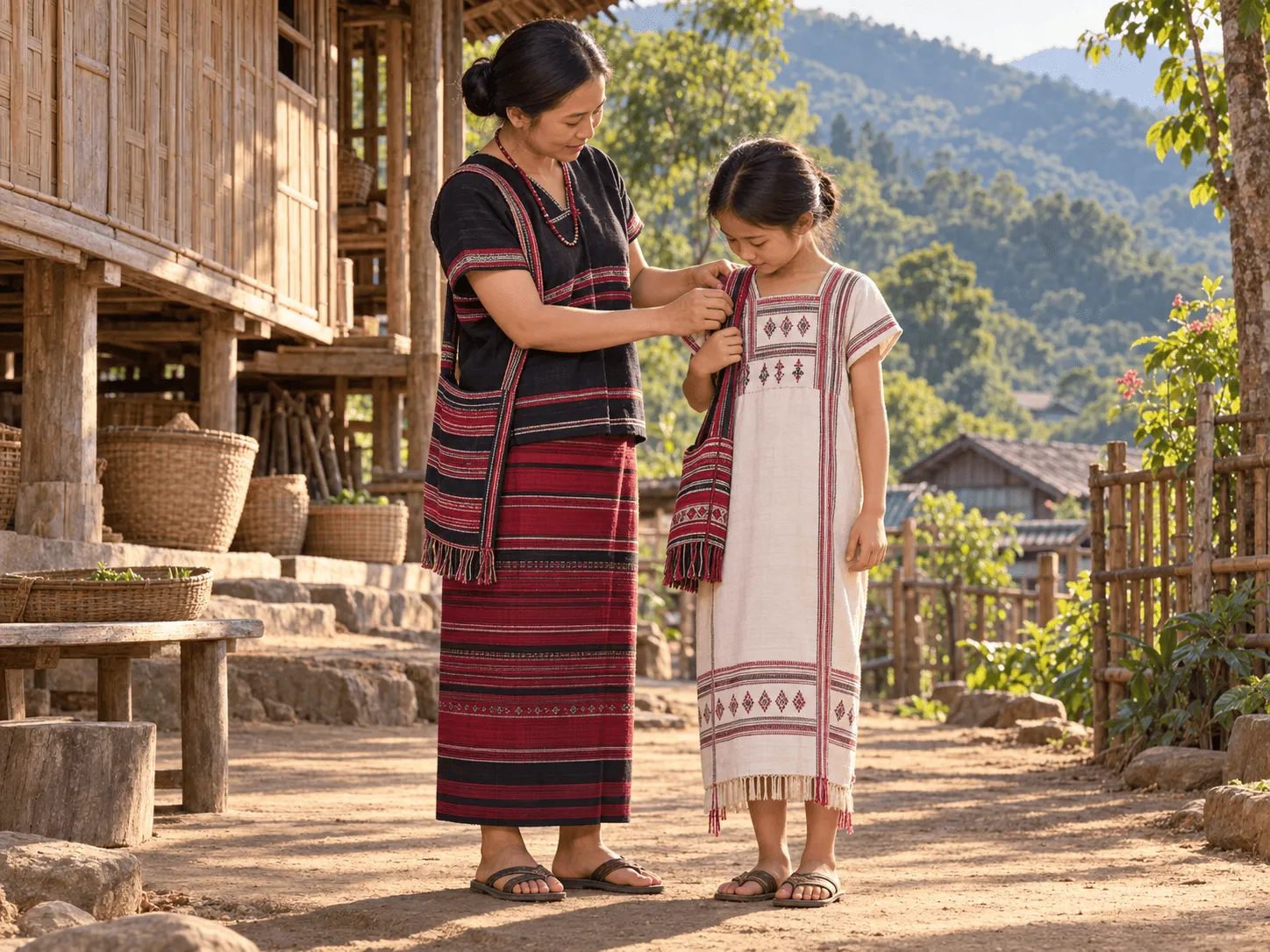
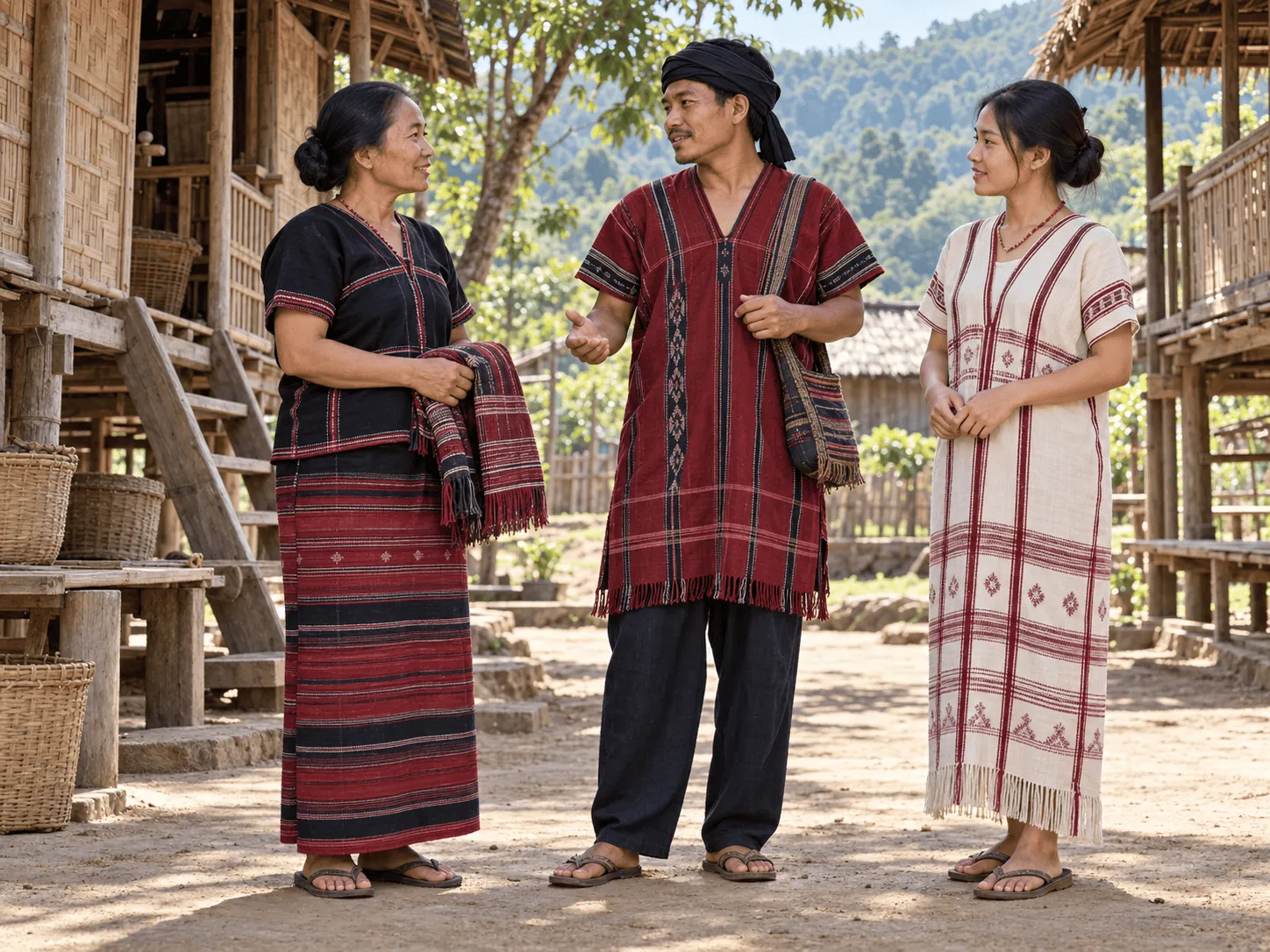
Woven clothing, scarves and bags offer another way into Karen cultural life. Ask about a textile’s makers and community, rather than using colour alone to identify its wearer.[10][11]
In Minnesota, KOM and the East Side Freedom Library collaborate on the Weaving Circle. Participants make and sell textiles, meet one another and teach younger people. Many learned to weave as children in Myanmar or Thailand; the programme documents youth learning on backstrap looms. This is a concrete example of cultural knowledge being practised and passed on after migration.[10]
Beliefs, New Year and wrist tying
Karen religious life includes Buddhism, Christianity and traditions involving spirits, among other beliefs. Practices can overlap, and no single religion represents every Karen community.[12]
Karen New Year
KOM places Karen New Year on the first day of the lunar month of Pyathoe, generally around the end of December or the beginning of January. It connects the completion of one rice harvest with the next agricultural cycle. Community celebrations can bring together clothing, speeches, music, dancing, food and sport. Check the local organiser’s announcement for an event’s date.[13]
Why tie white thread around the wrist?
Wrist tying is associated with calling back a person’s spirit and wishing for wellbeing and good fortune. KOM describes an annual ceremony in August and examples at weddings.[13]
Drum Publication Group’s account describes water, white thread, rice balls, wrapped sticky rice, bananas, flowers and sugarcane, with meanings attached to the offerings. This is an account of a particular ritual tradition, rather than a universal set of instructions. It offers a way to understand the ceremony’s spiritual meaning and its connections between generations.[14]
The Karen flag: colours, sun and drum
The Karen national flag combines red, white and blue with a rising sun and drum. KOM associates red with courage, white with purity or sincerity, and blue with honesty. It connects the sun’s nine rays with nine regions of origin. The flag appears at cultural gatherings and New Year celebrations.[11]

How the design developed
Drum Publication Group traces the design to requests for a national flag and anthem, discussed in parliament in 1935. A public competition attracted more than 100 designs. Its account describes combining Mann Ba Khin’s drum with the rising sun proposed by Sayar Moe and elephant imagery proposed by Dr. Ba Saw Dwe. This explains the design process; the article does not assign a definitive adoption or first-hoisting date.[15]
A bronze instrument, not a frogskin drum
The name “frog drum” can be misleading. The Metropolitan Museum of Art’s Karen Hpà-si is made of bronze and classified as a struck-vessel idiophone: its body vibrates when struck, rather than a stretched skin.[16]
Distinguish an ethnic flag from the flag of an administrative area or a particular organisation. Displaying a cultural symbol does not establish that every person shares the same political position.
History, displacement and cultural continuity
The development of writing and education, and the flag-design movement of the 1930s, are useful starting points for exploring Karen cultural history.[1][15]
Conflict and displacement are also part of the recent history. UNHCR describes refugees along the Thai–Myanmar border, including Karen and Karenni people, some of whom fled conflict beginning in the mid-1980s and have lived in Thailand for decades. This does not mean that every Karen person in Thailand is a refugee.[17]
Language resources and weaving projects show cultural continuity through practical activity. Learning, teaching and creating in a new place are part of contemporary Karen life, alongside inherited traditions.[6][10]
View the earlier article’s regional map

Dance, games and community gatherings
Don dance and bamboo dance
KOM describes don dance as a group performance that developed among Pwo Karen, with roles in expressing community values and, over time, regional or national pride. It also describes bamboo dance, where dancers coordinate their steps with moving bamboo poles. These are performance traditions to distinguish from ball sports or other games seen at gatherings.[11]
Watch specific examples
Sport can be part of a celebration, but one recording does not establish a game’s origin or rules across Karen communities. The two supplementary videos below are retained as examples to explore.[13]
Open the takraw and Maw Kae videos
The first recording was previously presented on this page as a takraw tournament. The second is a video that its uploader calls “Karen Traditional Game (Maw Kae)”. Its title alone does not establish detailed rules or historical origins.[18]


Frequently asked questions
Are Karen and Bamar the same people?
No. A connection to Myanmar, also called Burma, is different from membership of the Bamar ethnic group. Respect the ethnic name a person uses.[1][19]
Does everyone speak the same Karen language?
No. “Karen” can refer to several related languages. Check whether a resource teaches Sgaw, a Pwo language or another variety.[3][6]
Does Pa’o have a writing system?
Yes. Written Pa’o is represented in Unicode, including a dedicated tone mark. It should not be described simply as unwritten.[8]
What religion do Karen people follow?
There is no single answer. Karen communities include Buddhists, Christians and people practising traditional beliefs, among others.[12]