Overview
The Garifuna are an Afro-Indigenous people with communities along the Caribbean coast of Central America.
Their main communities are located in Honduras, Belize, Guatemala, and Nicaragua. Large Garifuna communities have also formed in the United States, particularly in New York City, Los Angeles, Houston, New Orleans, and Miami.
The Garifuna people trace their historical roots to the Caribbean island of Saint Vincent, known in the Garifuna language as Yurumein or Yurumei.
On Saint Vincent, Indigenous peoples of the Caribbean and people of African descent formed new families, communities, and cultural traditions over many generations. In the late eighteenth century, after resisting British colonial expansion, thousands of Garifuna were forcibly removed from Saint Vincent.
In 1797, survivors were transported to the island of Roatán, off the coast of present-day Honduras. From there, Garifuna communities spread along the Caribbean coasts of Honduras, Belize, Guatemala, and Nicaragua.
Today, Garifuna identity is sustained through family relationships, the Garifuna language, music, dance, food, fishing, cassava cultivation, spiritual traditions, and connections between communities in Central America, the Caribbean, and the United States.
In 2001, UNESCO proclaimed the language, dance, and music of the Garifuna a Masterpiece of the Oral and Intangible Heritage of Humanity. In 2008, these traditions were placed on the Representative List of the Intangible Cultural Heritage of Humanity.
Although most Garifuna communities are located in Central America, Central America is geographically part of the North American continent. Linglobe therefore places the Garifuna People in the North America category.
The Garifuna are not simply descendants of one African group or one Indigenous Caribbean group. They are a people whose identity developed through the historical meeting of Indigenous Caribbean, African, and later European and Central American influences.
They are also not a people who exist only through music and dance. Garifuna communities include teachers, fishers, farmers, artists, musicians, medical professionals, business owners, researchers, activists, athletes, and people working in many other fields.
Where the Garifuna Live
Garifuna communities extend along the Caribbean coast of Central America.
These communities are connected through family networks, maritime travel, migration, religious practices, festivals, music, and the Garifuna language. At the same time, the history and social conditions of each country have created regional differences in language use, food, music, occupations, and community life.
Honduras
Honduras has the largest Garifuna population in Central America.
Garifuna communities are concentrated along the Caribbean coast, especially in the departments of Cortés, Atlántida, Colón, Gracias a Dios, and Islas de la Bahía.
Important communities include Trujillo, Santa Fe, Limón, Iriona, Santa Rosa de Aguán, La Ceiba, Tela, Triunfo de la Cruz, Tornabé, Miami, and Bajamar.
Many Garifuna families have long depended on fishing, small-scale agriculture, maritime travel, trade, and wage labor. Today, people also work in education, tourism, transportation, healthcare, public administration, the arts, construction, and other fields.
According to the 2013 Honduran census, 43,111 people identified themselves as Garifuna. However, census figures do not necessarily include every person who identifies as Garifuna, and they should not be treated as a complete count of all Garifuna people living in Honduras or abroad. Organization of American States report on the Garifuna population of Honduras
Belize
In Belize, Garifuna communities are especially associated with Dangriga, Hopkins, Seine Bight, Punta Gorda, and Barranco.
Dangriga is one of the best-known centers of Garifuna culture and is home to cultural institutions, artists, musicians, teachers, and language preservation activities.
Garifuna Settlement Day is observed in Belize on November 19. It commemorates the arrival of Garifuna people in Belize in the early nineteenth century and is marked by music, dance, food, religious services, parades, and reenactments of arrival by canoe.
According to the 2022 Belize Population and Housing Census, approximately four percent of the country’s population identified as Garifuna. Statistical Institute of Belize: 2022 Population and Housing Census
Guatemala
In Guatemala, the largest Garifuna community is located in Livingston, known in Garifuna as Labuga, on the Caribbean coast of the department of Izabal.
Garifuna people also live in Puerto Barrios, Guatemala City, and other parts of the country.
Livingston is connected to Garifuna communities in Honduras and Belize through family ties, maritime travel, trade, music, and cultural events.
Guatemala’s 2018 census recorded 19,529 people who identified as Garifuna. This figure represents ethnic self-identification and is not the same as the number of Garifuna-language speakers. Guatemala National Institute of Statistics: 2018 Census results
Nicaragua
In Nicaragua, Garifuna communities are located mainly on the southern Caribbean coast, including Orinoco, La Fe, Marshall Point, Brown Bank, and surrounding communities in the Pearl Lagoon area.
The number of Garifuna people in Nicaragua is smaller than in Honduras, Belize, or Guatemala. Nevertheless, Nicaraguan Garifuna communities have maintained distinctive traditions of music, dance, food, family life, and spiritual practice.
The Garifuna language became severely endangered in Nicaragua as English-based Creole and Spanish expanded in daily life. Community members and educators have worked to reintroduce and teach the language.
The United States and the Wider Diaspora
Large-scale migration to the United States increased during the twentieth century, particularly after the expansion of maritime employment, agricultural labor, industrial work, and urban employment.
New York City, especially the Bronx and Brooklyn, is home to one of the largest Garifuna populations outside Central America.
Other significant communities exist in Los Angeles, Houston, New Orleans, Miami, Chicago, and additional cities.
People in the diaspora maintain connections with Central American communities through visits, remittances, funerals, religious ceremonies, music, online communication, family organizations, and cultural associations.
Living outside Central America does not mean that a person has lost their Garifuna identity. However, language use and cultural participation differ among individuals, families, cities, and generations.
Notes on Population Statistics
It is difficult to determine the total number of Garifuna people worldwide.
Different countries use different census years, definitions, and methods. Some statistics are based on ethnic self-identification, while others count people who speak the Garifuna language.
Many Garifuna people also live outside the countries where they or their families were born.
For these reasons, national census figures should not simply be added together and presented as the exact current population of all Garifuna people.
About the Name
Garífuna can refer to an individual person, the language, or the culture.
Garínagu is widely used as a collective plural meaning the Garifuna people.
Usage varies by language and region. In English and Spanish, Garifuna is often used for both the singular and collective forms. Within the Garifuna language, however, the distinction between Garífuna and Garínagu is important.
The name Garifuna is historically related to terms such as Kalinago and Karifuna, which were used in connection with Indigenous Caribbean peoples.
Historical European records often used the term Black Carib. This was a colonial classification used to distinguish the ancestors of the Garifuna from other Indigenous people on Saint Vincent.
The term still appears in historical sources, but it is not generally preferred as the present-day name of the people.
Linglobe uses Garifuna People as the page title while also introducing Garínagu as the collective form used within the Garifuna language.
History and Roots
Indigenous Societies of Saint Vincent
Before European colonization, Saint Vincent and the surrounding islands were inhabited by Indigenous peoples with cultural and linguistic connections across the Caribbean and northern South America.
Historical sources use names such as Kalinago, Island Carib, and Callinago. These names were not always used consistently, and European colonial writers often imposed categories that did not accurately represent how people identified themselves.
The people of Saint Vincent cultivated cassava and other crops, fished, traveled between islands by canoe, and maintained trade and family relationships across the Caribbean.
Saint Vincent’s mountainous interior and strong local resistance made it difficult for European powers to establish complete control over the island for many years.
The Formation of an Afro-Indigenous People
From the seventeenth century onward, Africans reached Saint Vincent through several routes.
Some survived shipwrecks. Others escaped from enslavement on neighboring islands or were brought through regional conflicts and trade. They formed relationships with Indigenous communities, established families, and participated in local society.
A well-known story describes two Spanish slave ships wrecked near Saint Vincent in the seventeenth century. Survivors are said to have reached the island and joined Indigenous communities.
This story is important in Garifuna oral history. However, historians generally understand the formation of the Garifuna people as a longer process involving multiple arrivals, escapes, alliances, marriages, and generations of cultural development rather than a single shipwreck.
The Garifuna language remained fundamentally Arawakan, while Garifuna society also developed through African knowledge, Caribbean Indigenous traditions, and later European influences.
Relations with France and Britain
During the eighteenth century, France and Britain competed for control of Saint Vincent.
Many Garifuna and Indigenous communities developed trading and political relationships with the French. French missionaries and settlers also influenced religion, names, vocabulary, and material culture.
After the Treaty of Paris in 1763, Britain claimed Saint Vincent.
British colonial authorities sought to expand plantation agriculture and seize land. Garifuna communities resisted the loss of their territory and political independence.
The Second Carib War and Chatoyer
Conflict between Garifuna forces and the British intensified during the Second Carib War, which began in 1795.
Joseph Chatoyer, also known as Satuyé, was one of the most important Garifuna leaders during the resistance.
Chatoyer formed an alliance with French revolutionary forces and led resistance against British expansion.
He was killed in battle in March 1795. Garifuna resistance continued after his death, but British forces eventually gained control.
Today, Chatoyer is remembered as a national hero in Saint Vincent and the Grenadines and as an important symbol of Garifuna resistance.
Confinement on Balliceaux
After the war, British forces captured thousands of Garifuna people and confined them on the small island of Balliceaux.
Food, water, shelter, and medical conditions were inadequate. Many people died from disease, hunger, and the harsh living conditions.
Historical records indicate that approximately 5,000 people were confined on Balliceaux. Only 2,026 survived to be transported to Central America.
Balliceaux is therefore a place of suffering, death, memory, and ancestral importance in Garifuna history.
In 2025, the government of Saint Vincent and the Grenadines acquired Balliceaux, creating new possibilities for protecting the island’s historical and cultural significance. Government of Saint Vincent and the Grenadines announcement on Balliceaux
Forced Relocation to Roatán
In 1797, British authorities deported the surviving Garifuna from Balliceaux to Roatán, an island off the coast of present-day Honduras.
The deportees arrived in April 1797.
Roatán had limited land and resources, so many Garifuna soon moved to the mainland coast. Communities were established in Honduras, and later in areas that are now Belize, Guatemala, and Nicaragua.
This movement was not simply voluntary migration. It began with military defeat, imprisonment, forced removal, and exile.
At the same time, the Garifuna people rebuilt families and communities in new lands while preserving memories of Yurumein and adapting to the coast of Central America.
Migration and Labor in the Nineteenth and Twentieth Centuries
During the nineteenth century, Garifuna people worked as fishers, farmers, sailors, boat builders, traders, soldiers, woodcutters, and laborers in ports and coastal settlements.
Their maritime knowledge allowed them to travel between communities and participate in regional trade.
During the late nineteenth and twentieth centuries, banana companies, shipping industries, railways, ports, and urban employment transformed the Caribbean coast of Central America.
Garifuna men often worked on ships, docks, plantations, railways, and construction projects. Women maintained households, agriculture, markets, food production, religious life, and community networks while also participating in wage labor and trade.
Migration expanded to national capitals and later to the United States.
These movements created transnational families whose members may live in several countries while continuing to support one another and participate in community life.
Culture
Family and Transnational Community
Family is central to Garifuna social life.
Households and family networks may include parents, children, grandparents, aunts, uncles, cousins, godparents, and relatives living in other countries.
Women, especially mothers and grandmothers, have often played major roles in maintaining family relationships, food traditions, language, religious knowledge, and community events.
Men have also contributed through fishing, agriculture, construction, maritime work, music, ritual responsibilities, and financial support.
Migration has created families whose members live in Central America, the United States, and other countries. Money, food, clothing, information, and travel move through these networks.
Funerals, ceremonies, festivals, and family emergencies may bring relatives together across national borders.
The Sea, Fishing, and Canoes
The Caribbean Sea has shaped Garifuna history and daily life.
Fishing has provided food, income, and knowledge about winds, currents, reefs, seasons, and marine life.
Garifuna fishers have used dugout canoes, paddles, sails, nets, hooks, traps, and other techniques depending on the region and historical period.
Canoes also made it possible to travel between coastal communities and islands.
The canoe is therefore more than a form of transportation. It is connected to migration, survival, trade, fishing, communication, and the memory of the journey from Saint Vincent to Central America.
Cassava and Agriculture
Cassava, also known as manioc or yuca, is one of the most important traditional crops in Garifuna food culture.
The processing of bitter cassava requires detailed knowledge because naturally occurring toxic compounds must be removed before it can be safely eaten.
The root is peeled, grated, pressed, sifted, and baked into a large, thin flatbread called ereba.
Traditionally, several people may participate in the work. Knowledge about cultivation, harvesting, grating, pressing, baking, and storing cassava has often been passed between generations.
Cassava connects Garifuna culture to older Indigenous Caribbean agricultural traditions.
Other crops include plantains, bananas, coconuts, maize, beans, rice, sweet potatoes, and various fruits and vegetables.
Food
Garifuna cuisine combines cassava, coconut, seafood, plantains, bananas, root crops, rice, and locally available vegetables and spices.
Hudut is a well-known dish made with mashed plantains or bananas and a coconut-based fish stew.
Machuca is another name used in some regions for dishes made with mashed plantains.
Tapou or tapado is a coconut-based soup or stew that may contain fish, seafood, plantains, cassava, and other ingredients.
Cassava bread, fish, coconut bread, and foods made from plantains are also important.
Garifuna cuisine varies across Honduras, Belize, Guatemala, Nicaragua, and diaspora communities. There is no single menu eaten by every Garifuna household.
Preparing and sharing food is connected to family gatherings, celebrations, funerals, religious events, work, and hospitality.
Drums and Music
Drumming is a central part of many Garifuna musical traditions.
The two principal drums are commonly known as the primera and segunda.
The primera usually plays improvised and highly responsive rhythmic patterns. The segunda provides a steadier rhythmic foundation.
Sísira, made from gourds or other materials filled with seeds or small objects, are shaken to produce rhythmic accompaniment.
Music may also include voices, handclapping, turtle shells, guitars, and other instruments.
Garifuna songs preserve stories, emotions, humor, criticism, family memories, historical experiences, and social commentary.
Punta and Punta Rock
Punta is one of the best-known Garifuna musical and dance traditions.
It is performed in social settings, celebrations, festivals, and sometimes in connection with wakes or mourning practices. Its meaning and performance context vary by community.
The dance often includes rapid and controlled movements of the hips and lower body, accompanied by drums and responsive singing.
Punta should not be reduced to an exotic or sexualized dance. It is a complex form of musical and social expression involving rhythm, skill, interaction, humor, identity, and community participation.
During the late twentieth century, musicians developed Punta Rock by combining traditional Garifuna rhythms with electric guitars, keyboards, amplified bass, drum machines, and other popular-music instruments.
Punta Rock helped introduce Garifuna music to wider audiences and became an important medium for expressing language, cultural pride, migration, politics, and contemporary life.
Pen Cayetano of Belize is widely associated with the early development of Punta Rock. Later artists, including Andy Palacio, helped bring Garifuna music to international audiences.
Paranda
Paranda is a Garifuna musical tradition strongly associated with guitar, voice, and storytelling.
Paranda songs may address love, loss, migration, social problems, personal experience, family, and community events.
The style reflects both Garifuna musical traditions and historical interaction with Spanish-speaking and Caribbean musical cultures.
Paranda is not simply imported Latin American guitar music. Garifuna musicians adapted the guitar to their own language, rhythmic traditions, stories, and performance practices.
Wanaragua
Wanaragua is a Garifuna masked dance tradition. In some English-speaking communities it is also known as Jankunu or John Canoe.
Performers wear elaborate clothing, masks, headpieces, ribbons, shells, and other decorations. The dancer’s movements respond closely to the drums.
The tradition is often performed during the Christmas and New Year season, although timing and local practice vary.
Wanaragua has been interpreted in several ways. Some explanations connect it to the history of resistance against British colonial forces, including the use of European-style clothing and masks as satire or disguise.
Other interpretations emphasize skill, competition, spiritual meaning, community memory, and the transformation of several African, Indigenous Caribbean, and European influences.
No single explanation fully represents every community or every historical period.
Stories and Oral Tradition
Garifuna culture has a strong oral tradition.
Stories, songs, proverbs, prayers, family histories, and accounts of migration have transmitted knowledge across generations.
Traditional stories may include animals, ancestors, spirits, historical figures, humor, moral lessons, and explanations of the natural world.
Oral traditions are not fixed texts that remain unchanged forever. Storytellers adapt their language, emphasis, and performance to the audience and situation.
Today, Garifuna oral traditions also appear in books, recordings, radio, film, social media, schools, and digital archives.
Religion and Ancestors
Garifuna religious life includes elements of Catholic Christianity, Protestant Christianity, African-derived spiritual traditions, Indigenous Caribbean traditions, and local family practices.
Not every Garifuna person follows the same religion or participates in the same ceremonies.
Ancestors have an important place in the spiritual life of many families.
Dügü is a major ancestral ceremony performed by some Garifuna families and communities. It may involve drumming, singing, dancing, food, prayer, healing, and the gathering of relatives.
A spiritual specialist commonly called a buyei has important responsibilities in ceremonies and healing traditions.
Dügü should not be described simply as entertainment or as a public dance festival. It is a religious and family ceremony whose meaning and rules are determined by participants and communities.
Clothing and Crafts
Traditional clothing used in Garifuna performances and celebrations may include brightly colored dresses, skirts, shirts, headwraps, ribbons, and patterned fabrics.
The exact style varies by country, community, event, performer, and period.
Some clothing seen in cultural festivals has been designed or standardized in modern times. It should not automatically be presented as an unchanged form worn by every Garifuna person throughout history.
Craft traditions include basketry, woodwork, drums, canoes, fishing equipment, cassava-processing tools, dolls, masks, jewelry, and decorative objects.
Many of these objects originated as practical tools used for food production, fishing, transportation, ceremony, or household life rather than as souvenirs.
Flags and Symbols
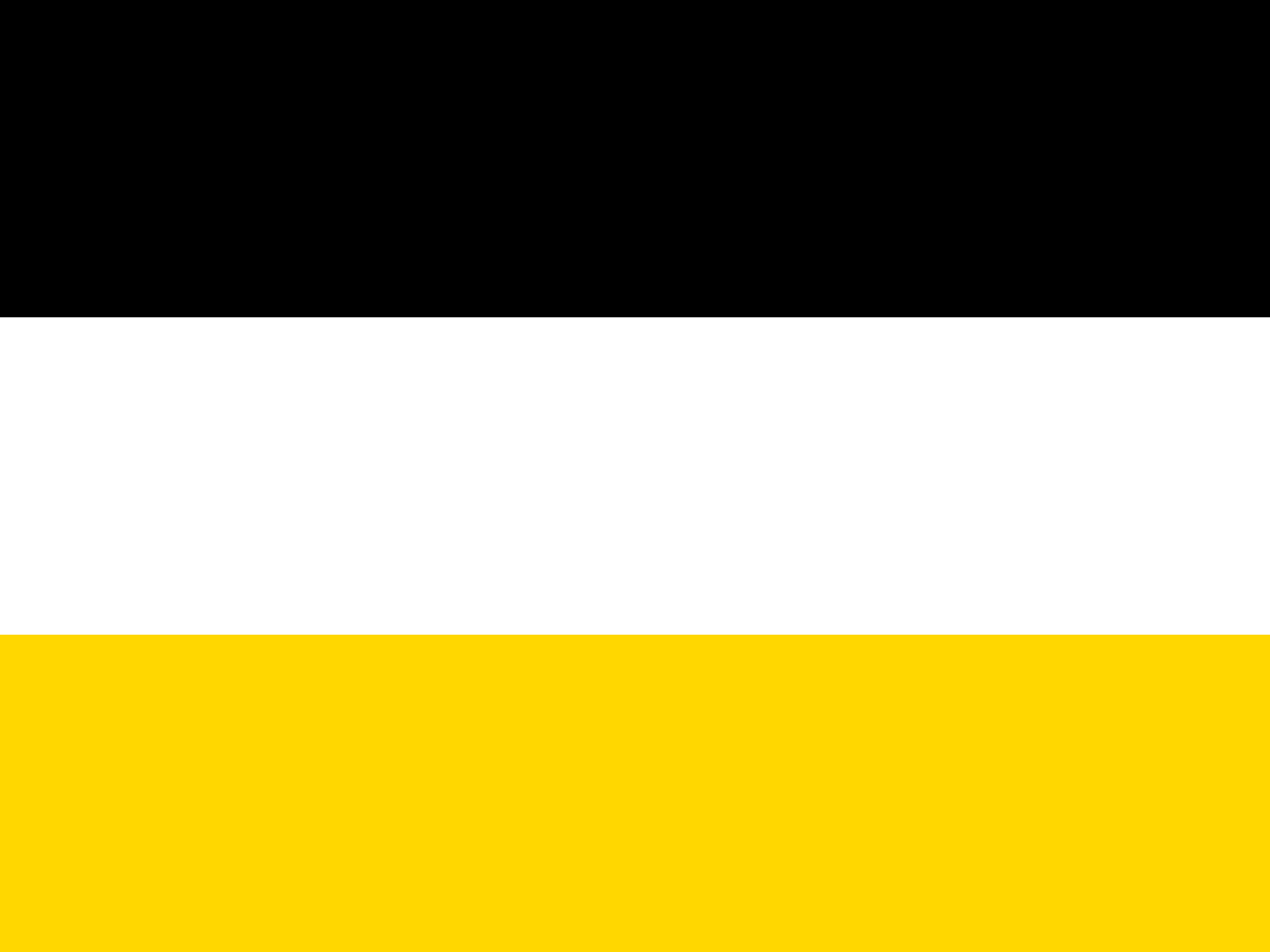
The most widely recognized Garifuna cultural flag consists of three horizontal bands: black, white, and yellow.
The flag is associated with Garifuna identity across national borders.
Interpretations of the colors vary among organizations and communities. Common explanations include:
- Black represents the African heritage and historical struggles of the Garifuna people.
- White represents peace, hope, or the Indigenous Caribbean element of Garifuna history.
- Yellow represents cassava, prosperity, hope, or the resources and future of the people.
These meanings are not defined identically in every community.
The Garifuna cultural flag is not the national flag of Honduras, Belize, Guatemala, Nicaragua, Saint Vincent and the Grenadines, or any other state. It is a transnational cultural and ethnic symbol rather than the legally established flag of a sovereign country.
Garifuna cultural flag
Cassava and Ereba
Cassava and ereba represent food, agriculture, Indigenous Caribbean knowledge, family work, and cultural continuity.
Tools used in cassava processing, including graters, woven strainers, presses, and baking surfaces, may also serve as visual symbols of Garifuna heritage.
Drums and Sísira
Drums and sísira symbolize music, dance, oral tradition, ceremony, communication, and community participation.
They should not be treated merely as decorative objects. Their meaning comes from the musicians, dancers, singers, ceremonies, and social relationships surrounding them.
Canoes and the Sea
The canoe and the Caribbean Sea represent travel, fishing, trade, exile, survival, and connections among Garifuna communities.
They also recall the forced journey from Saint Vincent to Roatán and the later movement of families along the Central American coast.
Saint Vincent and Balliceaux
Saint Vincent, or Yurumein, is remembered as the ancestral homeland of the Garifuna people.
Balliceaux represents imprisonment, death, exile, and ancestral memory.
These places remain culturally important even for Garifuna families whose ancestors have lived in Central America for many generations.
Language
The Garifuna language belongs to the Arawakan language family.
Its fundamental grammatical structure and much of its core vocabulary are Indigenous Caribbean in origin.
At the same time, the language contains vocabulary and cultural influences associated with African languages, French, English, Spanish, and other languages encountered throughout Garifuna history.
Garifuna is therefore not a Spanish dialect, an English dialect, or simply an African-European creole. It is an Arawakan language that developed through centuries of cultural contact.
Formation on Saint Vincent
The language developed from Indigenous Caribbean languages spoken on Saint Vincent and nearby islands.
Historical contact among Arawakan-speaking peoples, Kalinago communities, Africans, French colonists, British colonists, and neighboring Caribbean societies influenced its vocabulary and patterns of use.
French influence is especially visible in some numerals and words connected with religion, daily life, and colonial-era contact.
After the Garifuna were deported to Central America, Spanish and English became major sources of new vocabulary.
Regional Variation
Garifuna is spoken in Honduras, Belize, Guatemala, Nicaragua, the United States, and other parts of the diaspora.
Pronunciation, vocabulary, spelling, and preferred expressions vary among regions.
Belizean Garifuna has developed in close contact with Belizean Creole and English. In Honduras, Guatemala, and Nicaragua, Garifuna has been strongly influenced by Spanish.
Differences also exist between coastal villages, urban communities, families, and generations.
These varieties should not automatically be judged as correct or incorrect versions of a single standard. They reflect the history and multilingual environment of each community.
Vowels
Garifuna is commonly described as having six vowel phonemes:
- a
- e
- i
- o
- u
- ü
The letter ü represents a vowel sound that does not have an exact equivalent in standard English.
Some writing systems and educational materials distinguish vowel length by writing vowels twice, as in aa or ii.
Pronunciation may vary by region and speaker.
Consonants
Garifuna uses many consonants familiar to speakers of Spanish or English, but the relationship between spelling and pronunciation is not identical to either language.
Educational alphabets may include the following letters and combinations:
A, B, Ch, D, E, F, G, H, I, K, L, M, N, Ñ, O, P, R, S, T, U, Ü, W, and Y.
Some borrowed words use additional letters.
The combination ch generally represents a sound similar to English ch in church.
The letter ñ represents a sound similar to Spanish ñ or English ny in canyon.
The letters r, g, h, and other consonants may be pronounced differently depending on position, region, and speaker.
Stress
Stress is important in Garifuna pronunciation.
In some words, written accents are used to show the stressed syllable, especially when the stress differs from expected patterns or when dictionaries and educational materials aim to provide precise pronunciation.
Not all publications use accent marks in exactly the same way.
A word may therefore appear with slightly different spellings in dictionaries, songs, community publications, or online materials.
Basic Word Order
Garifuna often places the verb before the subject and object, although word order changes depending on emphasis, information structure, pronouns, and sentence type.
Describing Garifuna only as a language with one fixed word order would be misleading.
Pronouns and markers attached to verbs or nouns may show who performs an action, who receives it, or who possesses something.
As a result, information that English expresses through separate words may appear in Garifuna as prefixes, suffixes, or other grammatical markers.
Verbs
Garifuna verbs can express information about person, number, tense, aspect, and mood.
Different forms may indicate whether an action is completed, continuing, habitual, intended, possible, or commanded.
Pronouns may occur separately, but information about the subject or object can also be marked within the verbal construction.
The exact form depends on the verb, sentence structure, region, and speaker.
This system cannot be translated word for word into English or Spanish without losing some grammatical information.
Grammatical Gender and Agreement
Garifuna has grammatical distinctions traditionally described as masculine and feminine.
These categories can affect pronouns, demonstratives, articles, and agreement.
Grammatical gender does not always correspond directly to the biological sex or social gender of a person.
It is a feature of the language’s grammatical system and must be understood in relation to individual nouns and sentence patterns.
Singular and Plural
Garifuna distinguishes between singular and plural nouns and pronouns.
Plurality may be shown through articles, pronouns, suffixes, or surrounding words rather than through a single universal plural ending.
Garínagu is an important example of a collective plural referring to the Garifuna people, while Garífuna can refer to a person, the language, or the culture.
Possession
Possession is often expressed through prefixes, suffixes, or possessive forms connected to the noun.
Some nouns, especially terms for body parts and close family relationships, are commonly treated as inherently connected to a possessor.
Different grammatical patterns may be used for objects that can exist independently, such as tools, clothing, or houses.
These distinctions reflect relationships between people, objects, and categories of nouns rather than a simple substitution for the English word “my” or “your.”
Speech Forms Historically Associated with Men and Women
Historical descriptions of Garifuna have noted vocabulary differences associated with men’s and women’s speech.
Some explanations connect these differences to the complex Indigenous history of the Caribbean and to language contact among different populations.
However, these patterns should not be presented as a rigid rule in which all men and women always use completely different languages.
Many of the historically recorded differences are limited to particular words, expressions, generations, or contexts. Modern usage varies among speakers and communities.
Loanwords
Garifuna has borrowed words from several languages.
French influence is visible in numerals and some vocabulary connected to Catholicism, household life, and colonial-era contact.
Spanish influence is especially strong in Honduras, Guatemala, and Nicaragua.
English and Belizean Creole have influenced Garifuna in Belize and in diaspora communities.
African influence is especially important in music, religion, rhythm, oral expression, and cultural vocabulary, although identifying the exact origin of individual words is not always possible.
Borrowing does not make Garifuna less authentic. Languages naturally change through contact, migration, trade, education, and new technology.
Writing and Orthography
Garifuna is written with the Latin alphabet.
Historically, it was transmitted primarily through speech, song, storytelling, ceremony, and daily conversation.
Missionaries, researchers, teachers, and community members later developed written materials using different spelling systems.
Modern orthographies have become more standardized, but variation remains between countries, dictionaries, schools, churches, musicians, and individual writers.
The letter ü is particularly important because it represents a sound distinct from ordinary u.
Accents and doubled vowels may also appear in educational or linguistic materials.
A single word may therefore have more than one spelling without every alternative necessarily being an error.
Language Transmission and Status
The strength of the Garifuna language differs greatly by country and community.
In some Honduran and Belizean communities, children still learn Garifuna in the home and use it in daily life.
In other communities, Spanish, English, or Belizean Creole has become dominant among younger generations.
In Guatemala and Nicaragua, the number of fluent speakers is more limited in some areas.
Migration can both weaken and strengthen language transmission. Children in diaspora communities may have fewer opportunities to hear Garifuna every day, but urban cultural organizations, churches, musicians, online classes, and family networks can create new learning environments.
UNESCO has recognized the Garifuna language, dance, and music as intangible cultural heritage. This recognition has increased international awareness, but recognition alone does not guarantee that children will continue to speak the language. UNESCO: Language, dance and music of the Garifuna
Revitalization and Education
Garifuna educators and community organizations have created dictionaries, textbooks, literacy materials, children’s books, radio programs, music, videos, and online lessons.
Schools in some communities provide bilingual or intercultural education.
Musicians have also played an important role in language preservation. Songs allow listeners to hear pronunciation, rhythm, vocabulary, storytelling, and regional variation.
Digital communication has enabled speakers in Central America and the diaspora to share lessons, recordings, stories, and conversations.
Language revitalization is not simply the preservation of old words. It also involves creating ways to discuss modern education, technology, work, politics, health, and urban life in Garifuna.
Basic Expressions
Maburiga is a greeting often translated as “hello” or “welcome.”
Buiti binafi can be used as a morning greeting.
Seremein means “thank you.”
Ayóu is used as a farewell.
Numada means “my friend.”
Spellings and pronunciation may vary by country, community, and educational source. These forms should not be treated as the only possible expressions used by every Garifuna speaker.
Writing, Pronunciation, and Audio Resources
The following resources provide examples of written Garifuna, pronunciation, songs, interviews, and educational materials:
- Garifuna Research Institute
- >Garifuna Dictionary – Webster’s Online Dictionary
- Endangered Languages Project: Garifuna
- UNESCO: Language, dance and music of the Garifuna
- Garifuna in Belize – National Institute of Culture and History
These resources differ in spelling system, region, and purpose. Comparing several sources is more reliable than assuming that one dictionary or recording represents every Garifuna community.
Anyone wishing to reproduce images, recordings, or charts from these resources should check the copyright and terms of use for each site.
Traditional Play and Physical Expression
Garifuna cultural activities do not always fit neatly into separate categories such as games, work, dance, music, and ritual.
Children may learn rhythm, movement, fishing skills, craftwork, storytelling, and social responsibilities through observation and participation.
Handmade Toy Boats
In coastal communities, children have made small boats from wood, leaves, coconut materials, discarded objects, or other locally available materials.
These toy boats imitate canoes, fishing boats, and sailing vessels used by adults.
Playing with them can involve knowledge of balance, wind, waves, currents, construction, and the maritime environment.
The exact form of the toy differs by place and generation.
Dolls
Handmade dolls have been created from cloth, wood, plant fibers, corn husks, and other materials.
Some dolls wear clothing associated with Garifuna festivals or performances.
Today, dolls may be used as toys, teaching materials, decorative art, or cultural souvenirs.
They should not all be described as ancient sacred objects. Their meaning depends on who made them, how they are used, and the context in which they are presented.
Drums, Masks, and Dance Reenactments
Children and young people may learn Garifuna songs and dances through schools, family events, cultural organizations, and festivals.
They may practice drumming, singing, mask-making, costume-making, and coordinated movement.
Some performances reenact the arrival of Garifuna people by canoe or represent events connected to Saint Vincent, Roatán, settlement, fishing, and community history.
These activities combine education, performance, memory, and public celebration.
Wanaragua Competitions and Education
Wanaragua performances sometimes include competition between dancers or groups.
Skill may be judged through rhythm, footwork, body control, costume, endurance, creativity, and the dancer’s ability to respond to the drummer.
The drummer and dancer interact closely. A dancer may challenge the drummer with complex movements, while the drummer responds with changing rhythmic patterns.
Modern competitions and stage performances are part of a living tradition, but they may differ from family, seasonal, or ceremonial performances.
Punta Dance
Punta can be performed socially and competitively.
Participants may take turns entering a dance space while musicians and spectators respond.
Control, rhythm, improvisation, interaction, and endurance are important.
Punta is sometimes presented internationally as if it were the only Garifuna dance. Garifuna culture also includes Wanaragua, Chumba, Hüngühüngü, Paranda-related performance, and other regional and ceremonial forms.
Common Misconceptions
“The Garifuna Came Only from Africa”
African heritage is fundamental to Garifuna identity, but the Garifuna people also have deep Indigenous Caribbean roots.
Their language is Arawakan, and cassava cultivation, canoe traditions, and other elements connect them to Indigenous Caribbean history.
Garifuna identity developed through the meeting and transformation of multiple peoples over generations.
“The Garifuna Began with a Single Shipwreck”
The story of shipwrecked Africans reaching Saint Vincent is important in Garifuna oral tradition.
However, the formation of the Garifuna people probably involved multiple arrivals, escapes from enslavement, marriages, alliances, and long-term cultural interaction.
A single event cannot fully explain the origins of an entire people.
“Garifuna Culture Is Only Music and Dance”
Music and dance are highly visible parts of Garifuna culture, but they are not the whole culture.
Language, family, fishing, agriculture, food, migration, religion, oral history, education, political organization, land rights, and modern professions are also essential.
“Every Garifuna Person Speaks Garifuna Fluently”
Language use differs by country, community, family, and generation.
Some people speak Garifuna as their first language. Others understand it but speak it less often, while some are learning it as adults.
A person does not cease to be Garifuna simply because they are not fluent in the language.
“All Garifuna People Live in Traditional Coastal Villages”
Many Garifuna people still live in coastal communities, but others live in national capitals, inland towns, and large cities in the United States.
Urban Garifuna communities continue to maintain family networks, music, food, language programs, religious practices, and cultural organizations.
“Punta Represents Every Garifuna Dance”
Punta is internationally famous, but Garifuna dance traditions are diverse.
Wanaragua, Chumba, Hüngühüngü, and other dances have different histories, rhythms, purposes, and performance contexts.
Treating all Garifuna dance as Punta hides this diversity.
“The Garifuna Cultural Flag Is a National Flag”
The black, white, and yellow flag is an important cultural symbol used across Garifuna communities.
It does not represent a sovereign state and is not the official national flag of any Central American country.
Garifuna People Today
Garifuna people today live in coastal villages, national capitals, industrial cities, university communities, and international diaspora networks.
They work in fishing, farming, shipping, tourism, construction, education, healthcare, public administration, business, music, filmmaking, research, law, digital media, and many other fields.
Garifuna artists and musicians continue to develop Punta Rock, Paranda, traditional drumming, hip-hop, reggae, jazz, electronic music, and other forms.
Writers, teachers, filmmakers, and language activists use books, schools, radio, documentary film, social media, and online classes to preserve and expand Garifuna cultural expression.
At the same time, Garifuna communities face serious challenges.
These include the loss of coastal land, pressure from tourism development, environmental damage, limited employment, discrimination, migration, violence, unequal access to education and healthcare, and the weakening of language transmission.
The situation is not identical in every country or community.
Garifuna organizations and community leaders have worked to defend collective land rights, cultural rights, language education, environmental protection, and political participation.
The Garifuna are not passive survivors of history.
They are people who rebuilt their communities after war, imprisonment, deportation, and exile, and who continue to create new forms of cultural, linguistic, artistic, and political life.
Their connection to Yurumein, Balliceaux, Roatán, the Caribbean coast of Central America, and the global diaspora shows how a people can remain connected across islands, national borders, languages, and generations.
Garifuna culture is not a relic of the past. It is a living and changing culture sustained through family, language, music, food, memory, spirituality, creativity, and community action.