Overview
Who Are the Māori People?
The Māori are the Indigenous people of New Zealand. Their ancestors are believed to have migrated to New Zealand from Eastern Polynesia using large ocean-going canoes known as
“waka.”
According to archaeological evidence and oral traditions, the ancestors of the Māori arrived in New Zealand around the 13th century. They possessed advanced navigation skills and crossed the Pacific Ocean using stars, ocean currents, and wind patterns.
The Māori established tribal societies throughout New Zealand and developed a community-based culture centered on land, ancestry, and kinship. Their social structure is traditionally organized into groups such as:
- iwi (tribes)
- hapū (sub-tribes or clans)
- whānau (extended families)
The Māori language, known as “Te Reo Māori,” belongs to the Austronesian language family and the Polynesian language group. Today, it is recognized as one of the official languages of New Zealand, and language revitalization efforts have expanded in recent decades.
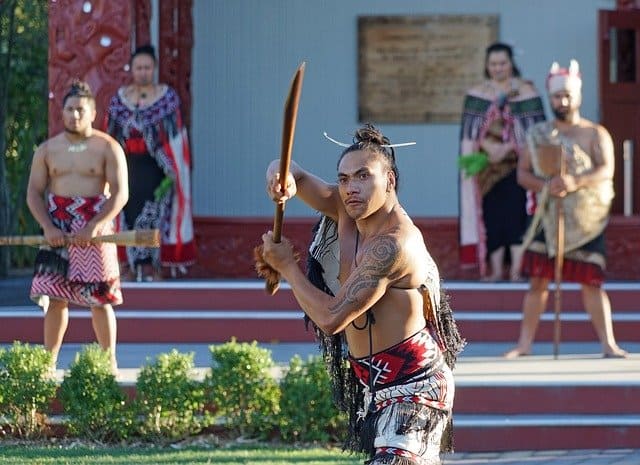
Māori culture places strong importance on connections with nature and ancestors. Traditional arts such as carving, weaving, songs, and dances have developed over centuries. Among them, the “Haka” is internationally famous. Haka performances have historically been used in warfare, ceremonies, welcomes, and other important occasions.
The Māori are also known for “Tā moko,” their traditional tattoo culture. Tā moko is not simply decorative; it traditionally represents genealogy, social status, identity, and personal history.
European contact began after Dutch explorer Abel Tasman reached New Zealand in 1642, followed by British explorer James Cook in 1769.
In 1840, many Māori chiefs and representatives of the British Crown signed:
The Treaty of Waitangi.
This treaty remains one of the most important documents in New Zealand’s history, politics, and Indigenous rights discussions.
However, colonization, land disputes, and warfare significantly affected many Māori communities. During the 19th and 20th centuries, urbanization and assimilation policies also contributed to declines in Māori language use.
In recent decades, efforts related to:
- Māori language education
- Cultural revitalization
- Indigenous rights movements
- Community restoration
have become increasingly active.
Today, the Māori remain an important part of New Zealand society and continue to play major roles in politics, arts, sports, education, and many other fields.
Location
Indigenous to New Zealand, mainly residing in the North Island.
Region
Continent: Oceania
Region: Indigenous to New Zealand, mainly residing in the North Island.
History
Maori Of Polynesian origin, the Māori arrived in New Zealand by canoe around the 13th century. They developed a tribal society with a rich culture. In 1840, they signed the Treaty of Waitangi with the British, though land disputes continued.
Culture
- Haka:A war dance performed before battle (also famous in rugby).
- Tā moko:Traditional tattoos on the face and body.
- Canoe culture:Skilled in navigation, with strong ties to the sea.
- Tribal structure (iwi):Emphasis on kinship and tribal identity.
Māori Flag and Symbols
Official Flag
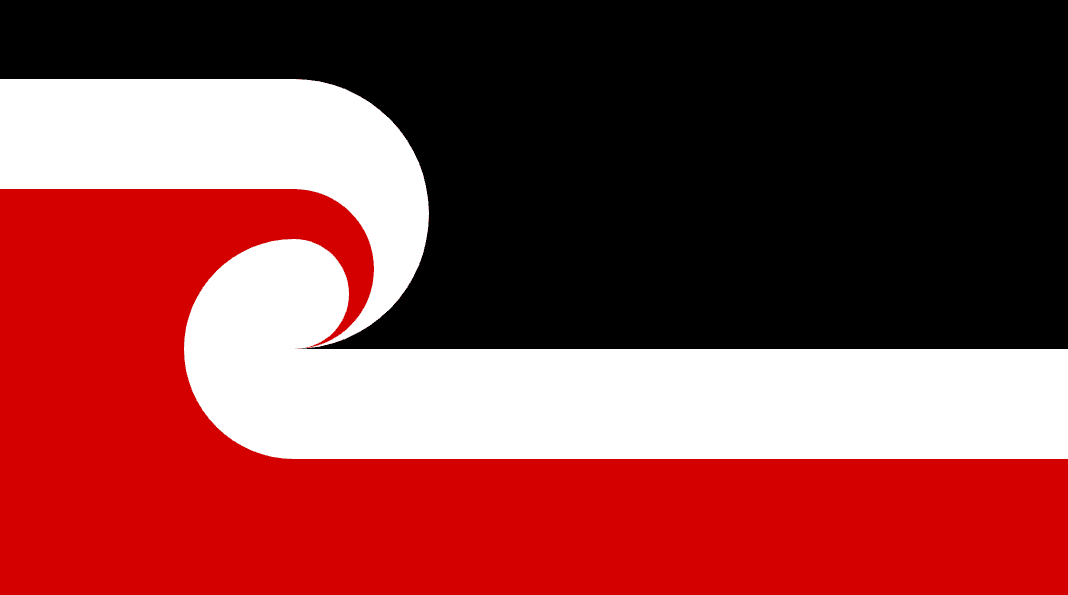
Tino Rangatiratanga Flag (symbol of sovereignty)
- Colors: Black, white, and red.
- Spiral motif (koru):Represents life, renewal, and connection to ancestors.
Other Symbols
Tino Rangatiratanga Flag (symbol of sovereignty)
- Silver Fern: National symbol, also important to the Māori.
- Tā moko patterns:Tattoos expressing individual identity.
Language
Māori Language Features
- Language Family: Austronesian, Eastern Polynesian branch.
- Phonetics:5 vowels (a, e, i, o, u), soft sounds similar to Japanese, with many diphthongs.
- Writing:Latin script, using macrons (ā) to indicate long vowels.
Characteristics
- Clear syllable structure (e.g., Aotearoa = Ao-tea-roa).
- Distinctive sounds like H and Wh (pronounced as "f" or "w").
- Official language of New Zealand.
Common Māori Greetings and Phrases
| English | Maa Language | Pronunciation |
| Hello | Kia ora | kee-ah oh-rah |
|---|---|---|
| Good morning | Mōrena | moh-reh-nah |
| Thank you | Tēnā koe | teh-nah koh-eh |
| Nice to meet you | Nō hōro mai | no ho-roh mai |
| Good night | Moe mai rā | moh-eh mai rah |
| Delicious | Reka | reh-kah |
| Fun/Enjoyable | Hari | hah-ree |
Notes
- Kia ora is versatile, meaning "hello," "thank you," or "how are you?"
- Tēnā koe for one person, Tēnā kōrua for two, Tēnā koutou for three or more.
Origin and Writing of Māori Language
Māori belongs to the Eastern Polynesian languages, closely related to Tahitian and Cook Islands Māori. Ancestors migrated by canoe from East Polynesia.
Developed by missionaries in the 19th century, using Latin script. Macrons denote long vowels.
After a period of decline, Māori became an official language in 1987 and has seen significant revitalization.
Access Guide
The currency of the Māori people is the New Zealand Dollar (NZD).
The currency shown here is the official currency (NZD) of New Zealand, where the Māori people mainly live. Different currencies may be used in other countries.
https://www.xe.com/currencyconverter/
Māori Region (New Zealand)
Access to Māori Region (New Zealand) from Major Cities
| Departure City | Direct/Transit | Arrival Airport | Flight Time (approx.) | Reference Fare (one-way/round-trip, Economy) |
| Los Angeles | LA → Direct to Auckland | Auckland Airport (AKL) | 13 hours | US$900–1,600 |
|---|---|---|---|---|
| New York | NY → via LA/San Francisco → Auckland | Auckland Airport (AKL) | 20–26 hours | US$1,200–1,900 |
| London | London → via Dubai/Singapore → Auckland | Auckland Airport (AKL) | 25–31 hours | £900–1,500 |
| Tokyo | Tokyo → Direct to Auckland | Auckland Airport (AKL) | 11–12 hours | ¥150,000–240,000 |
| Sydney | Sydney → Direct to Auckland | Auckland Airport (AKL) | 3.5 hours | A$350–700 |
| Hong Kong | Hong Kong → Direct/via Singapore → Auckland | Auckland Airport (AKL) | 11–13 hours | HK$5,000–8,000 |
| Shanghai | Shanghai → Direct/via Singapore → Auckland | Auckland Airport (AKL) | 12–15 hours | CNY3,600–6,300 |
| Singapore | Singapore → Direct to Auckland | Auckland Airport (AKL) | 10–11 hours | S$900–1,600 |
Traditional Games of the Maori
1.Kapa haka/h4>
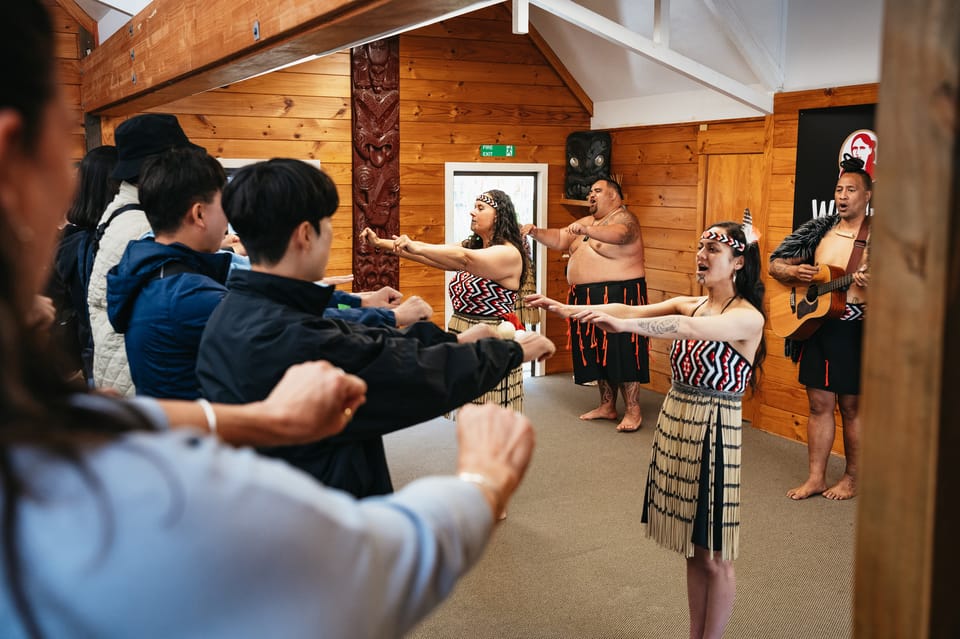
- Description: A performance combining song, dance, and haka.
- Purpose:Cultural expression, often competitive.
2.Kī-o-rahi
- Description:A ball game played on a circular field with offense and defense roles.
- Purpose:Strategy and speed-focused sport blending tradition and modern play.
3.Ti rākau
- Description:A stick game where pairs throw and catch sticks rhythmically.
- Purpose: Develops coordination and rhythm.
Introduction video
These traditions highlight the Māori people's deep cultural roots, connection to nature, and commitment to preserving their heritage.