Overview
The Mapuche are an Indigenous people inhabiting south-central Chile and southwestern Argentina.
The name “Mapuche” means “People of the Land” in their language, Mapudungun.
They have maintained distinct cultural traditions, a strong social structure, and a proud history of resistance against Spanish colonization and later assimilation policies by the Chilean and Argentine governments.
The Mapuche are one of the Indigenous peoples of southern South America, primarily living in what are now south-central Chile and southwestern Argentina.
The name “Mapuche” comes from the Mapudungun language and is commonly interpreted as:
- Mapu = land or earth
- Che = people
meaning:
“People of the Land” or “People of the Earth”
The Mapuche are believed to have lived in the southern Andes region long before European contact, where they developed their own communities, social structures, and cultural traditions.
Their traditional language is:
Mapudungun
which is generally considered either a language isolate or part of a very small independent language family. Today, many Mapuche people also speak Spanish, although language revitalization efforts have expanded in recent years.
Traditional Mapuche society has historically placed strong importance on connections to land and nature. Agriculture and livestock raising were central parts of community life, and collective social structures developed within local communities.
The Mapuche are also known for their textile traditions and silver craftsmanship. Traditional clothing and jewelry often display regional variations and cultural symbolism.
In terms of spirituality, Mapuche culture has traditionally emphasized relationships with nature, ancestors, and spiritual forces. Spiritual leaders known as:
Machi
play important roles in ceremonies, healing practices, and traditional religious life.
After the arrival of the Spanish in South America during the 16th century, the Mapuche resisted colonial expansion for a long period of time. One of the most significant conflicts was:
The Arauco War
a prolonged struggle between the Mapuche and Spanish colonial forces that continued for centuries.
Throughout much of the colonial period, parts of Mapuche territory maintained a relatively high degree of autonomy.
However, during the 19th century, the expansion of the Chilean and Argentine states resulted in large areas of Mapuche land being incorporated into national territory. This led to major social and territorial changes for many Mapuche communities.
Today, many Mapuche people live in urban areas and participate in fields such as education, arts, politics, and social activism. At the same time, issues related to:
- Land rights
- Indigenous rights
- Language preservation
- Environmental protection
remain important topics within many Mapuche communities.
Today, the Mapuche are recognized as the largest Indigenous group in Chile, and their history, language, spiritual traditions, and traditional arts continue to represent an important part of South America’s cultural diversity.
Mapuche Flag and Symbols
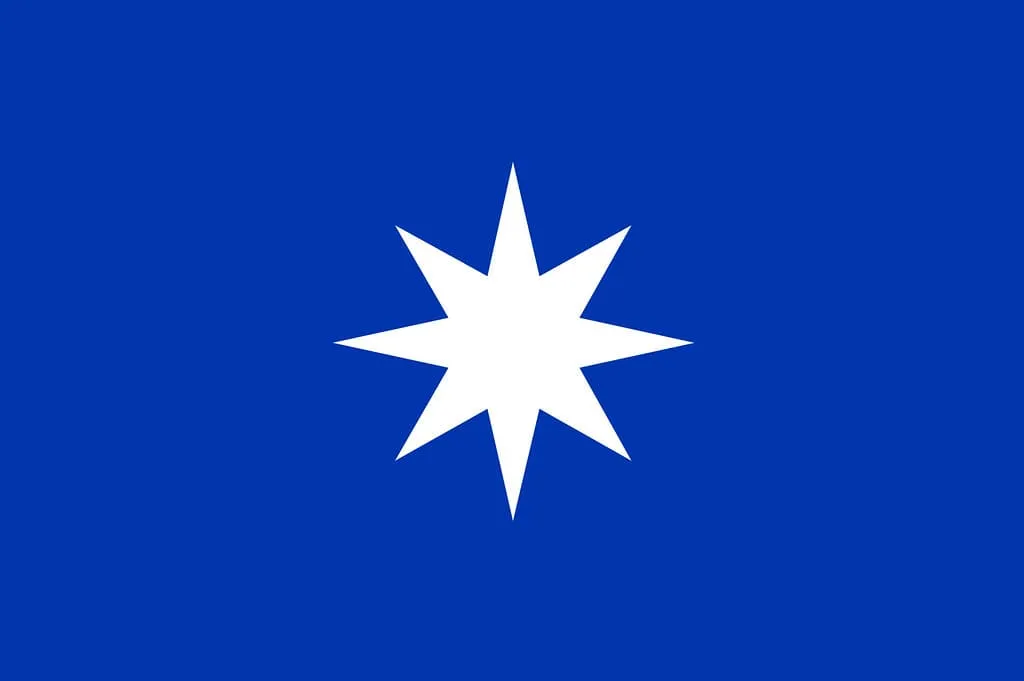
Wüñellfe
Key Symbols
・A star/sun motif representing the universe; often appears on Mapuche flags and textiles.
Kultrún
・A sacred ceremonial drum, circular and decorated with a cross pattern, symbolizing the Mapuche worldview.
Language
- Name: Mapudungun
- Language Family:solate (not classified within any major language family)
- Speakers: Approximately 200,000 in Chile and Argentina (number declining)
- Grammar: Agglutinative (rich in suffixes and particles), basic word order SOV (Subject-Object-Verb)
Writing System
- Traditionally, Mapudungun was an oral language. Today, the Latin alphabet (Spanish-style) is used for writing.
- No unique script exists, but standardized Latin-based orthography is increasingly used.
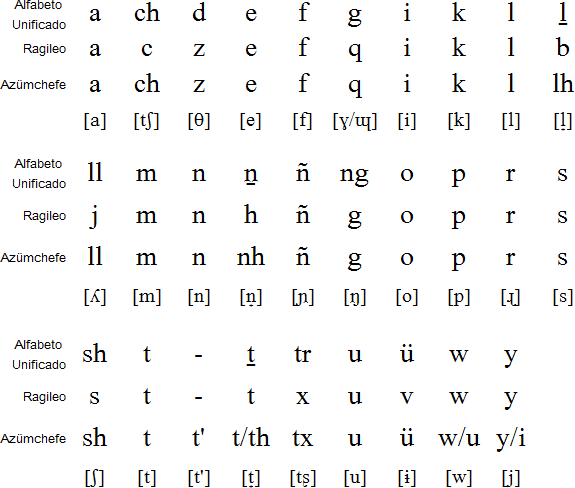
Common Mapudungun Greetings and Phrases
| English | Mapudungun | Pronunciation |
| Hello | Mari mari | MAH-ree MAH-ree |
|---|---|---|
| Good morning | Mari mari | MAH-ree MAH-ree |
| Thank you | Küme tüfa | KOO-meh TOO-fah |
| Nice to meet you | Kisu mapu | KEE-soo MAH-poo |
| Good night | Küme akuy | KOO-meh AH-kwee |
| Delicious | Küme | KOO-meh |
| Fun/Enjoyable | Ayüwn | AH-yoonn |
Note
Mari mari” is a universal greeting. “Küme” means “good” or “beautiful” and is used in various positive contexts.
Language Origin
Language Origin & Historical Background
- Mapudungun is a language isolate, unrelated to other South American languages.
- Spoken for centuries on the west side of the Andes, it survived the Inca Empire and Spanish colonization.
- Speaker numbers are declining due to Spanish dominance, but revival movements are ongoing among the Mapuche people.
Region
Continent: America
Region: South America Chile and Argentina
Access Guide
Mapuche Nation
The currency of the Mapuche people is the Chilean Peso (CLP).
0.00093 EUR / 0.0011 USD / 0.15 JPY / 0.0077 CNY / 0.0017 AUD / 0.0014 SGD / 0.0084 HKD / 0.00079 GBP / 0.092 INR
https://www.xe.com/currencyconverter/
Sample routes from major cities to Temuco (Chile, Mapuche homeland)
| Departure City | Direct/Transit | Arrival Airport | Flight Time (approx.) | Reference Fare (one-way/round-trip, Economy) |
| Los Angeles | LA→Santiago→Temuco | Temuco Airport (ZCO) | ~16–20 hrs | US$1,100–1,600 |
|---|---|---|---|---|
| New York | NY→Santiago→Temuco | Temuco Airport (ZCO) | ~16–21 hrs | US$1,200–1,800 |
| London | London→Europe→Santiago→Temuco | Temuco Airport (ZCO) | ~18–23 hrs | £900–1,300 |
| Tokyo | Tokyo→USA→Santiago→Temuco | Temuco Airport (ZCO) | ~28–32 hrs | ¥250,000–350,000 |
| Sydney | Sydney→Santiago→Temuco | Temuco Airport (ZCO) | ~15–18 hrs | A$1,700–2,200 |
| Hong Kong | HK→USA/EU→Santiago→Temuco | Temuco Airport (ZCO) | ~28–34 hrs | HK$10,000–16,000 |
| Shanghai | Shanghai→USA/EU→Santiago→Temuco | Temuco Airport (ZCO) | ~27–34 hrs | RMB 9,000–15,000 |
| Singapore | Singapore→USA/EU→Santiago→Temuco | Temuco Airport (ZCO) | ~29–35 hrs | S$2,000–2,800 |
Note: Fares and times are estimates; actual costs depend on season and route.
Traditional Games
For Children
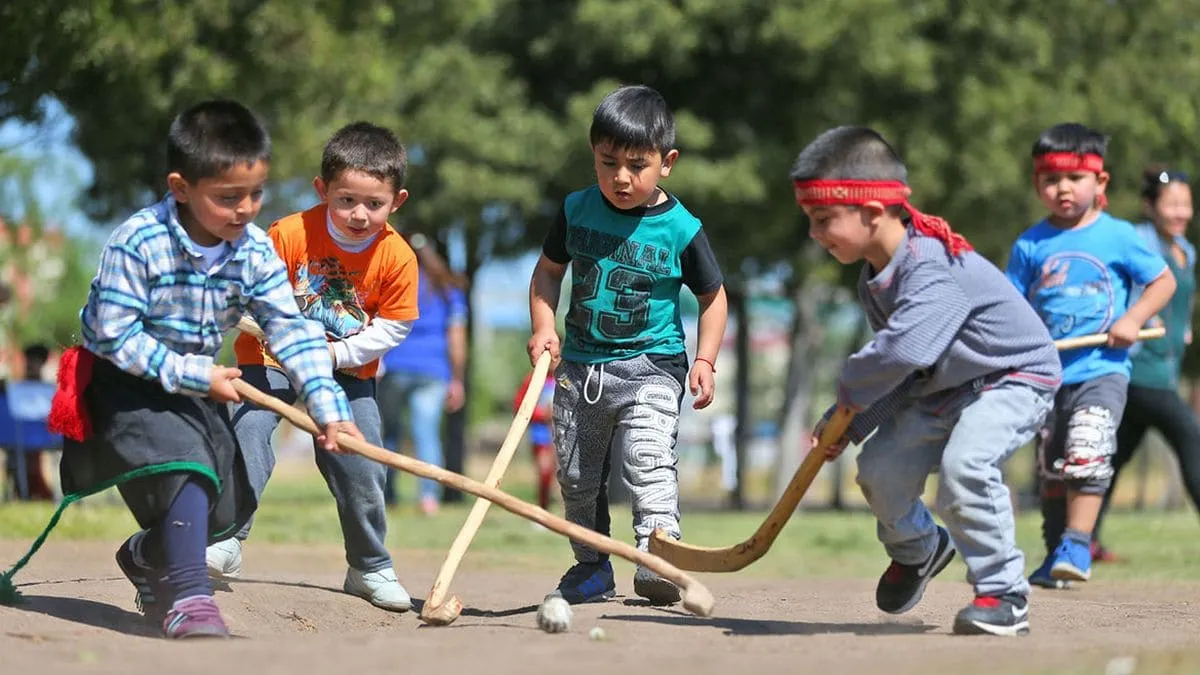
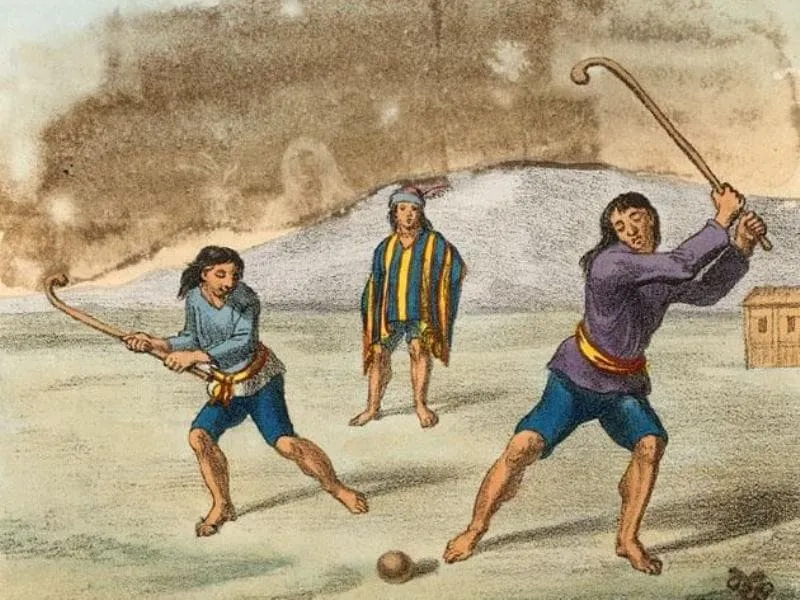
Palín
A traditional stick-and-ball game similar to field hockey, played by teams. It is central to Mapuche cultural identity and enjoyed by all ages.
For Adults
Ngillatun
A religious ceremony rather than a game, but includes group competitions, races, and tests of strength during festivals.
Ayekauntun
Traditional dance and singing (Ayekauntun) are also key festival activities.
Introduction video
Sources (International Databases)
・The Mapuche are a proud Indigenous people of South America, deeply connected to their land and traditions.
・Main symbols include the “Wüñellfe” and “Kultrún.”
・The language Mapudungun is agglutinative and a language isolate.
・The traditional game Palín is a symbol of cultural pride.