Overview
- The Quechua are the largest Indigenous group in South America and the descendants of the Inca civilization.
- With an estimated population of over 8 million, they are active in preserving and revitalizing their language and culture.
The Quechua people are one of the largest Indigenous groups living in the Andes region of South America. They are primarily found in:
- Peru
- Bolivia
- Ecuador
- Southern Colombia
- Northern Chile
- Northwestern Argentina
and surrounding areas.
The Quechua are widely known for their close historical connection to the Inca Empire. During the time of the Inca Empire, the Quechua language was used extensively as a common language for administration, trade, and communication across large parts of the Andes.
Today, Quechua remains one of the largest Indigenous language groups in South America and continues to be spoken widely in many regions.
The language belongs to the:
Quechuan language family
and includes multiple regional dialects and variations. Many Quechua people also speak Spanish.
The ancestors of the Quechua are believed to have been connected to Indigenous societies that developed in the Andes Mountains over a long period of time. Even before the rise of the Inca Empire, they had already established agricultural systems and community-based social structures adapted to high-altitude environments.
Traditional Quechua society relied heavily on mountain agriculture. Important crops have included:
- Potatoes
- Maize
- Quinoa
The raising of animals such as:
- Llamas
- Alpacas
has also played important roles in transportation, trade, wool production, and daily life.
Community cooperation has long been an important feature of Quechua culture. Traditions of mutual aid and collective labor have historically been maintained within local communities.
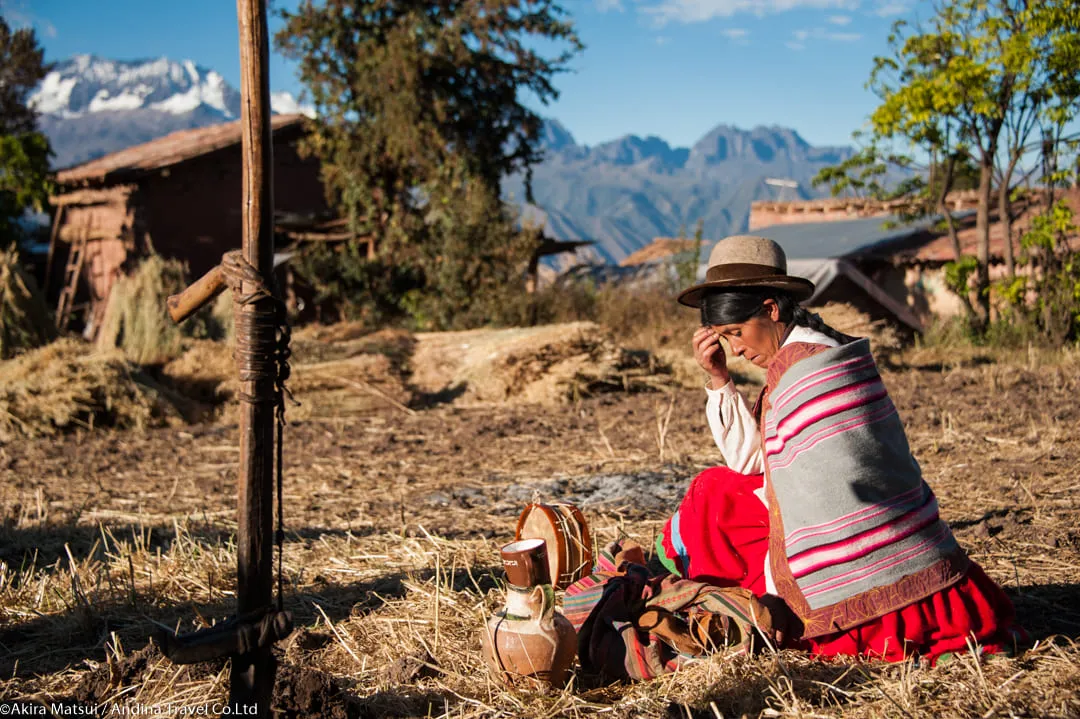
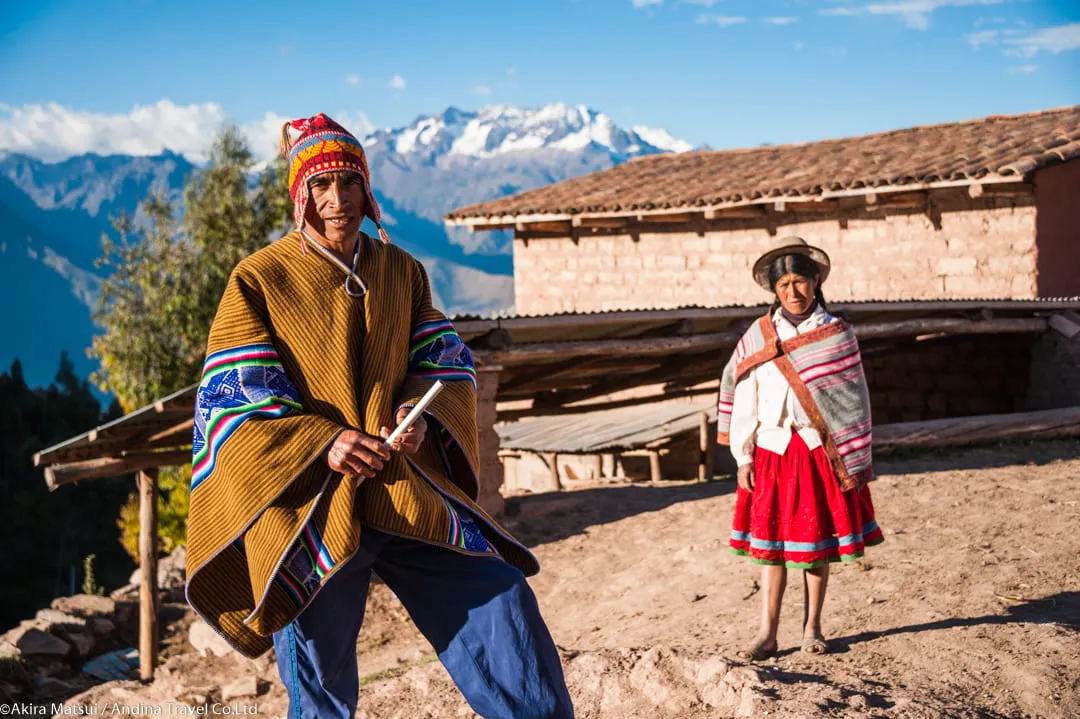
The Quechua are also widely known for their colorful textile traditions. Traditional clothing and woven fabrics often display regionally distinctive colors and patterns and are considered important symbols of Andean culture.
Music is another important cultural element. Traditional instruments such as:
- The quena (vertical flute)
- The zampoña (pan flute)
are well known throughout the Andes region.
In terms of religion and spirituality, Catholicism spread widely after the Spanish colonization of the Andes during the 16th century. At the same time, traditional Andean spiritual beliefs connected to mountains, nature, and ancestor traditions have continued to survive in many communities.
After the Spanish conquest of the Inca Empire, Quechua societies experienced major changes related to colonial rule, labor systems, and land ownership. Many Indigenous communities were significantly affected during the colonial period.
Today, many Quechua people live not only in rural mountain regions but also in urban areas, where they participate in fields such as education, tourism, arts, politics, and business. At the same time, issues related to:
- Language preservation
- Poverty
- Land rights
- Indigenous rights
continue to affect many Quechua communities.
Today, the Quechua are recognized as one of the largest Indigenous populations in South America, and their language, agricultural traditions, textiles, music, and community culture continue to represent an important part of the cultural diversity of the Andes.
Location
Primarily located across the Andean regions
History
- Central to the Inca Empire (13th–16th centuries), spreading Quechua as an administrative language.
- After the Spanish conquest in the 1530s, they faced suppression but retained many cultural practices.
- Today, efforts to preserve language and identity are growing, with Quechua recognized as an official language in several countries.
Culture
- Textiles:Brightly colored garments with symbolic patterns.
- Spirituality:Syncretic mix of Catholicism and Indigenous beliefs (e.g., Pachamama, the earth goddess).
- Agriculture:Adapted to highlands—potatoes, corn, quinoa.
- Architecture & Crafts:Advanced stonework and ceramics.
- Festivals:The Inti Raymi (Sun Festival) is a major cultural event.
Quechua Symbols and Flag

Wiphala Flag
but symbolic motifs includ
・A rainbow-colored checkerboard representing unity, equality, and harmony with nature.
・Official national symbol in Bolivia.
・Icons:The sun, puma, and condor are symbolic in Quechua cosmology.
Language
San languages fall within the broader Khoisan language family.
- Language Family Quechuan languages (multiple dialects).
- Speakers Over 8–10 million.
Features
- Agglutinative Uses suffixes to express grammatical relationships.
- SOV word order (Subject–Object–Verb).
- No tones; uses clear suffix-based logic.
- Dialects vary significantly by region.
Common Quechua Greetings and Phrases
| English | Quechua | Pronunciation |
| Hello | Rimaykullayki | ree-my-koo-yai-kee |
|---|---|---|
| Good morning | Allin p’unchay | ah-yeen poon-chai |
| Thank you | Sulpayki | sool-pie-kee |
| Nice to meet you | Ñuqaqa kusikuni | nyoo-kah-kah koo-see-koo-nee |
| Good night | Allin tuta | ah-yeen too-tah |
| Delicious | Sumak mikuy | soo-mak mee-kooy |
| Fun/Enjoyable | Kusikuy | koo-see-kooy |
Language Origins
- Khoisan languages are believed to be among the oldest language families in human history.
- Genetic studies show the San people retain some of the oldest human DNA lineages.
- Click sounds may have offered advantages for hunting and stealth communication.
Writing System
- Originated in the central highlands of Peru.
- Spread across the Andes via the Inca Empire as a lingua franca.
- Survived colonial repression; now officially recognized in eru, Bolivia, Ecuador.
- Actively revitalized through education, media, and Indigenous rights movements.
Detailed Habitat
- Peru:Cusco, Puno, Ayacucho.
- Bolivia:La Paz, Potosí, Oruro.
- Ecuador:Sierra region.
- Also present in:Northern Chile, Argentina, southern Colombia.
Access Guide
The currency of the Quechua people is the Peruvian Nuevo Sol (PEN).
0.239 EUR / 0.27 USD / 39.76 JPY / 1.99 CNY / 0.43 AUD / 0.35 SGD / 2.17 HKD / 0.2 GBP / 23.84 INR
https://www.xe.com/currencyconverter/
Quechua Nation
Example Routes to the Quechua Region (Cusco, Peru) from Major Cities
| Departure City | Direct/Transit | Arrival Airport | Flight Time (approx.) | Reference Fare (one-way/round-trip, Economy) |
| Los Angeles | LA→Lima→Cusco | Cusco Airport (CUZ) | ~15–20 hrs | US$900–1,400 |
|---|---|---|---|---|
| New York | NY→Lima→Cusco | Cusco Airport (CUZ) | ~14–19 hrs | US$950–1,500 |
| London | London→EU/USA→Lima→Cusco | Cusco Airport (CUZ) | ~19–26 hrs | £900–1,300 |
| Tokyo | Tokyo→USA→Lima→Cusco | Cusco Airport (CUZ) | ~27–33 hrs | ¥220,000–330,000 |
| Sydney | Sydney→USA/EU→Lima→Cusco | Cusco Airport (CUZ) | ~23–29 hrs | A$1,900–2,600 |
| Hong Kong | HK→USA/EU→Lima→Cusco | Cusco Airport (CUZ) | ~27–33 hrs | HK$11,000–17,000 |
| Shanghai | Shanghai→USA/EU→Lima→Cusco | Cusco Airport (CUZ) | ~28–34 hrs | RMB 9,800–15,000 |
| Singapore | Singapore→USA/EU→Lima→Cusco | Cusco Airport (CUZ) | 29–36 hrs | S$2,400–3,200 |
Note: Fares and times are estimates; actual costs depend on season and route.
Games
1.Sapo (Frog Game)
・Tossing coins into the mouth of a metal frog.
・Popular in festivals; mixes luck and skill.
2.Trompo (Spinning Top)
Traditional wooden top spun with a string.
3.Kukuy (Throwing Stones/Beans)
Target game using small objects.
4.Huayno Music and Dance
Performed for fun and celebration across generations.
Introduction video
The Quechua people represent a living legacy of the Andes—preserving Inca roots while thriving in modern life across South America.
Sources (International Databases)
・風景写真家・松井章のブログ andina-travel.com/blog/peru190825/