Overview
The Ainu are the Indigenous people of Japan, particularly in Hokkaido. They possess a distinct language, deep respect for nature, and unique cultural traditions passed down through generations.
The Ainu are an Indigenous people who have historically lived mainly in Hokkaido, as well as in Sakhalin, the Kuril Islands, and parts of northern Honshu. Today, people with Ainu ancestry live in Hokkaido and in other parts of Japan.
The word “Ainu” is generally understood to mean “human” in the Ainu language. The Ainu people developed their own language, spiritual beliefs, oral literature, music, dance, clothing, and crafts.
The Ainu language is generally considered a language isolate, as no confirmed relationship has been established between it and neighboring languages such as Japanese or Russian. Historically, there were regional varieties such as Hokkaido Ainu, Sakhalin Ainu, and Kuril Ainu. Today, however, fluent daily speakers are very few, and efforts toward language education and revitalization are ongoing.
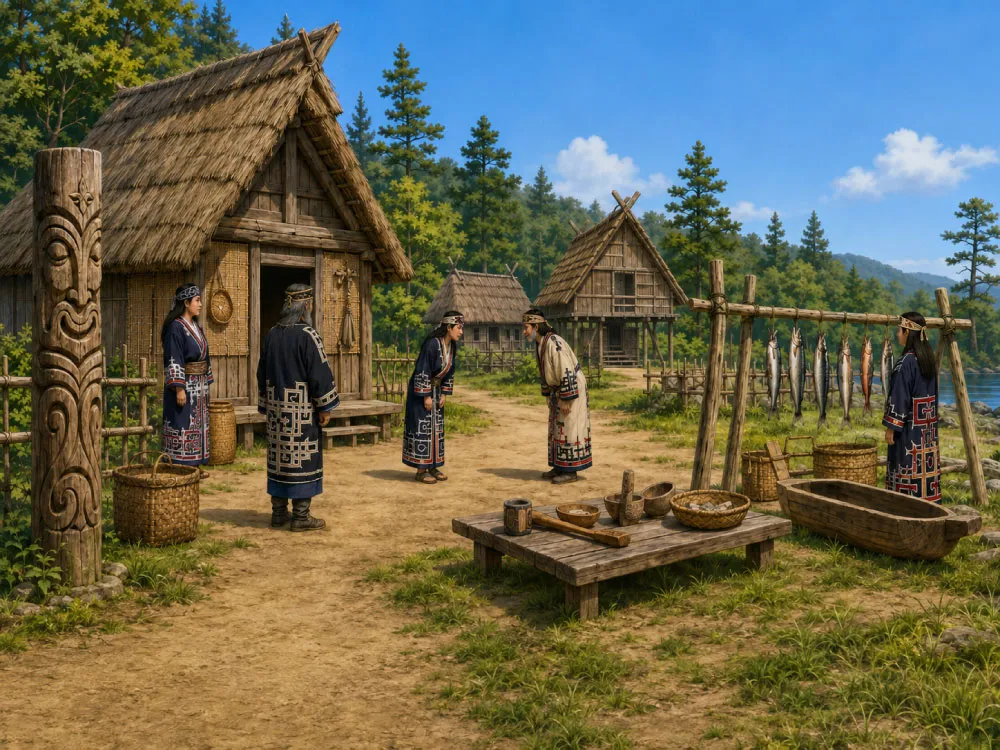
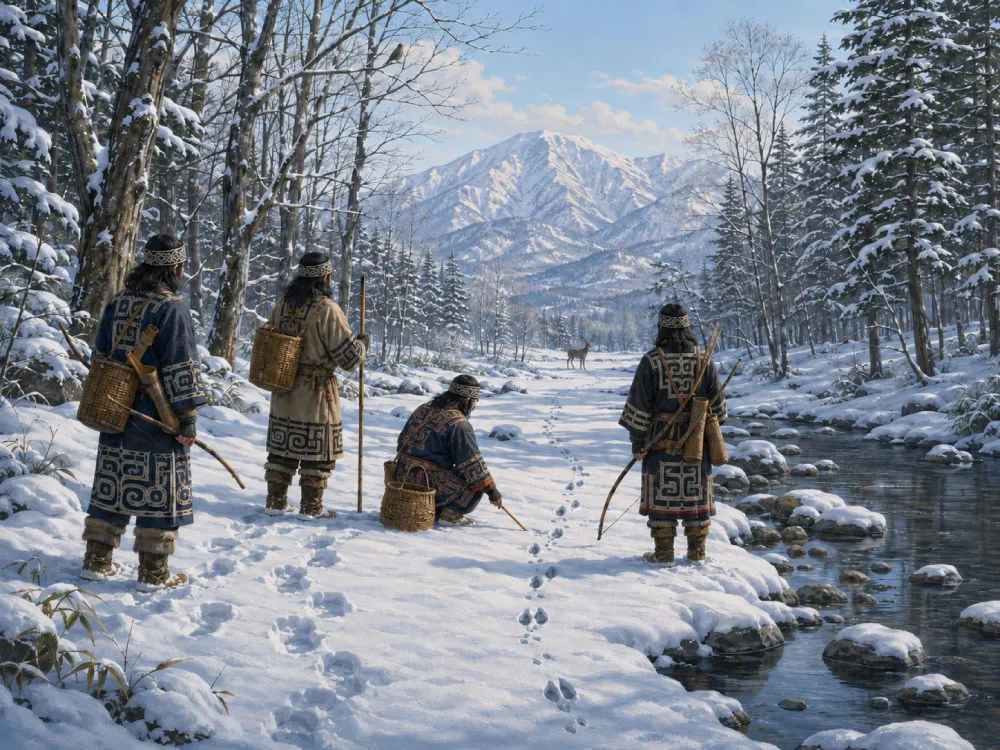
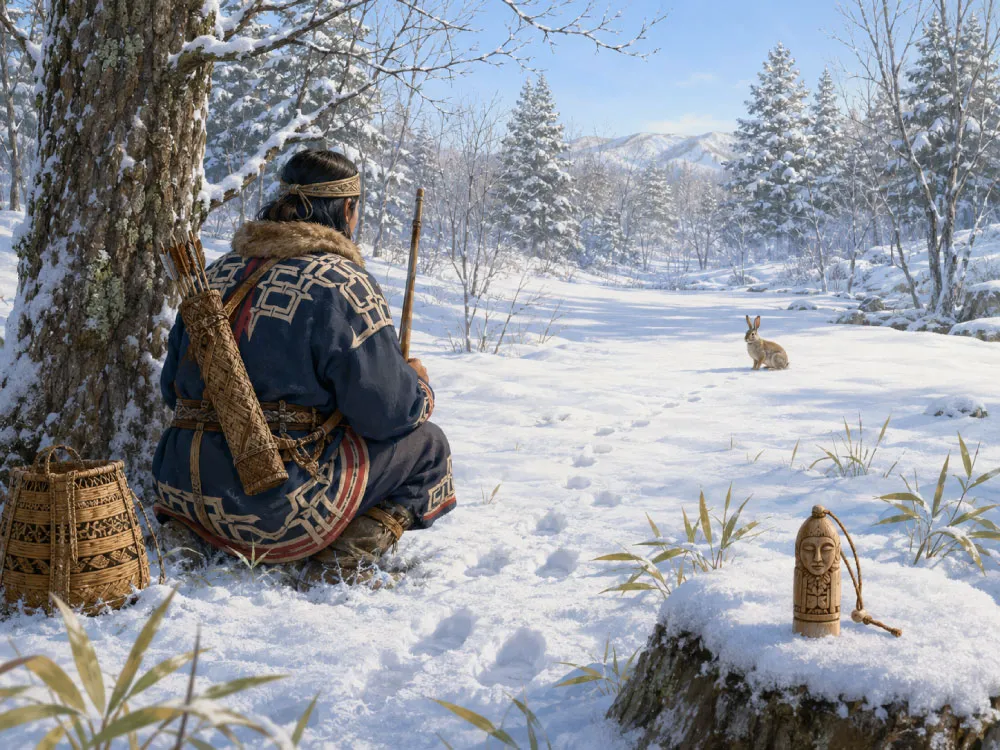
Traditional Ainu life was based mainly on hunting, fishing, and gathering. Salmon fishing in rivers was especially important, while deer and bear hunting, as well as the gathering of plants and nuts, also played major roles in daily life. The Ainu also engaged in trade with surrounding regions, including Hokkaido, Honshu, Sakhalin, and areas of the Asian continent.
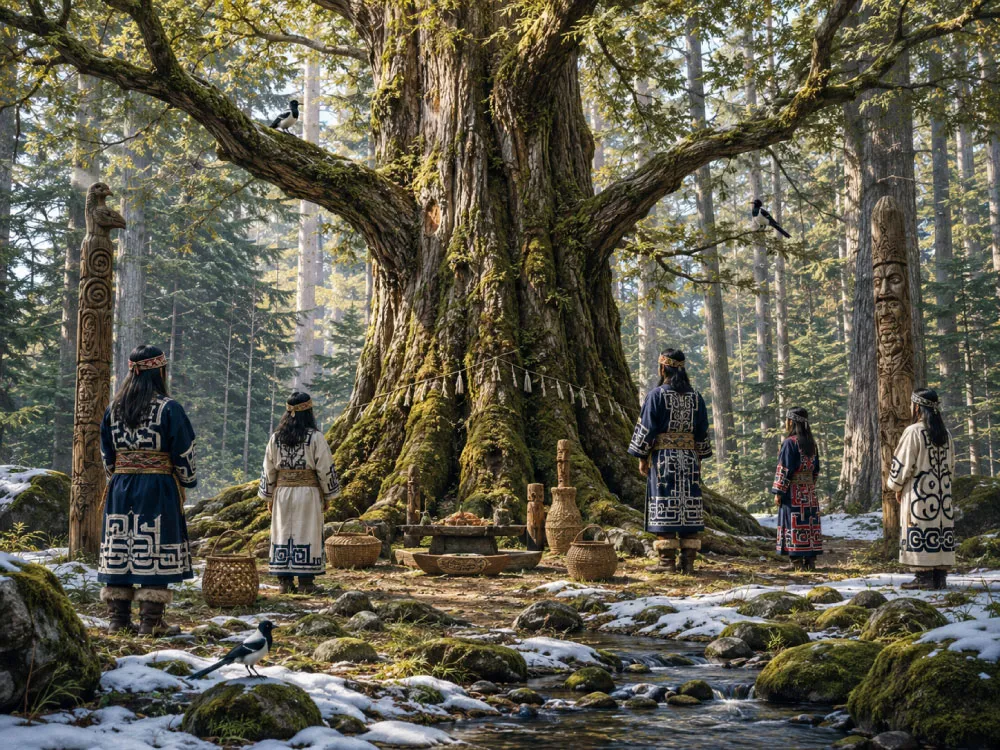
In Ainu culture, many beings in the natural world were believed to possess souls or spiritual power. Divine or spiritual beings are called:
Kamuy
Animals, plants, fire, water, mountains, the sea, and even tools could be associated with kamuy. Bears were especially important in some regions, and bear-sending ceremonies were traditionally practiced.
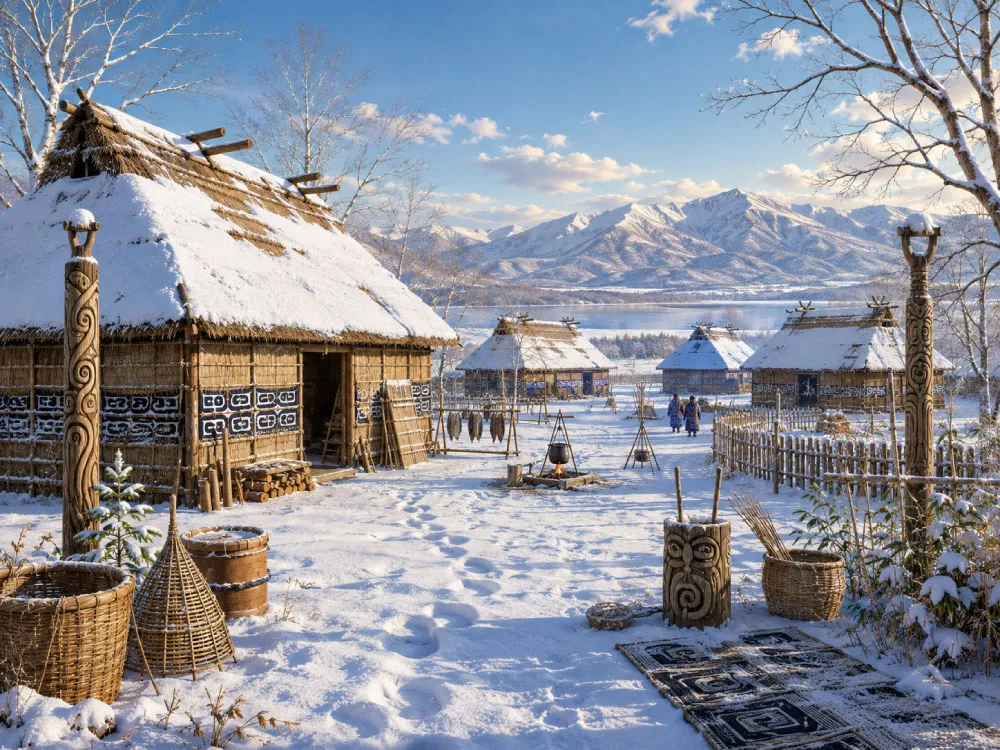
Traditional Ainu houses are called:
Cise
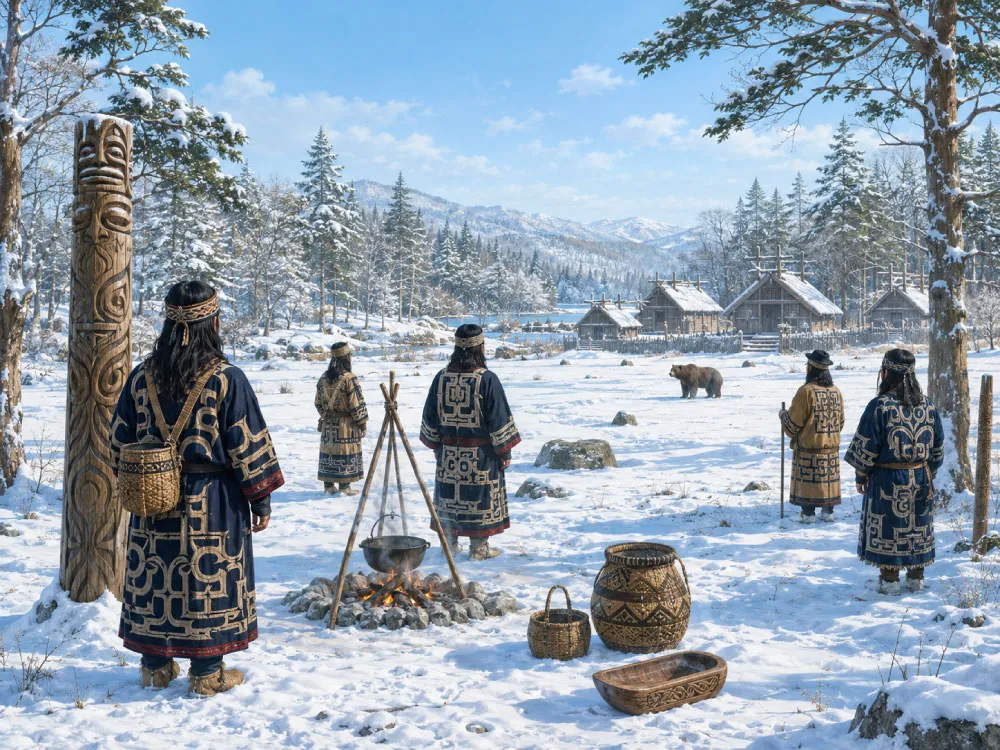
These homes were built using materials such as wood and grass. Traditional clothing included garments known as:
Attus
which were made from the fibers of trees such as elm or linden. Ainu clothing and tools often featured distinctive patterns, which are important elements of Ainu craft traditions.
The Ainu are also known for their rich oral literature. Important traditions include:
Yukar
heroic epic narratives, and:
Kamuy Yukar
stories about gods or spiritual beings.
These stories were traditionally passed down through spoken performance rather than written texts.
Historically, the Ainu formed their own societies in Hokkaido and surrounding regions. However, increased trade and political control by the Japanese gradually brought major changes to Ainu society. During the Edo period, relations with the Matsumae Domain intensified, and systems such as contract trading had significant economic and social effects on Ainu communities.
After the Meiji period began, the Japanese government promoted the development of Hokkaido, and Ainu land use and traditional ways of life became increasingly restricted. In 1899, the Hokkaido Former Aborigines Protection Act was enacted, and under assimilation policies, the transmission of the Ainu language and traditional culture became increasingly difficult.
From the late 20th century onward, movements for Ainu cultural revitalization and rights recognition became stronger. In 1997, the Ainu Culture Promotion Act was enacted, and in 2019, the Ainu Policy Promotion Act officially recognized the Ainu as an Indigenous people of Japan.
Today, efforts to preserve and revitalize Ainu culture continue through Ainu language education, traditional dance, crafts, oral literature, music, and historical research. In Shiraoi, Hokkaido, Upopoy, the National Ainu Museum and Park, has been established as one of the major centers for learning about Ainu culture.
Today, the Ainu are an important Indigenous people for understanding the history and culture of northern Japan. Their language, spiritual beliefs, oral literature, crafts, and relationship with nature represent an important part of the cultural diversity of Japan and Northeast Asia.
Location
Indigenous people mainly living in Hokkaido, Sakhalin, and the Kuril Islands.
Region
Continent: Asia
Region: Japan (Hokkaido), Russia (Sakhalin, Kuril Islands)
History
From around the 13th century, the Ainu engaged in trade with the Japanese (Wajin).
During the Edo period, Japanese expansion into Hokkaido altered Ainu life.
After the Meiji era, assimilation policies caused a decline in Ainu language and culture. Today, there is an active movement to revive and preserve their heritage.
Culture
Animistic beliefs (Kamuy worship), traditional textiles (attus), woodcraft (inau, nipopo dolls), dance (rimse), and the bear sending ceremony (iomante) are key cultural elements.
Modern Day
"Upopoy" (National Ainu Museum) offering cultural experiences in Hokkaido.
Ainu Population and Geographic Distribution
The Ainu are an Indigenous people traditionally inhabiting northern Japan, particularly Hokkaido, as well as parts of Sakhalin and the Kuril Islands. For centuries, Ainu communities maintained a distinct cultural identity, closely connected to hunting, fishing, and the natural environment.
Due to historical assimilation policies and social discrimination, the number of people officially identifying as Ainu declined significantly during the modern era. Today, estimates of the Ainu population vary, with figures ranging from tens of thousands to over one hundred thousand individuals, depending on criteria such as self-identification and ancestry.
Most contemporary Ainu people live in Hokkaido, while others reside in major urban areas across Japan. Although fluent speakers of the Ainu language are few, cultural identity and heritage continue to be passed on through families, communities, and cultural organizations.
Ainu Flag
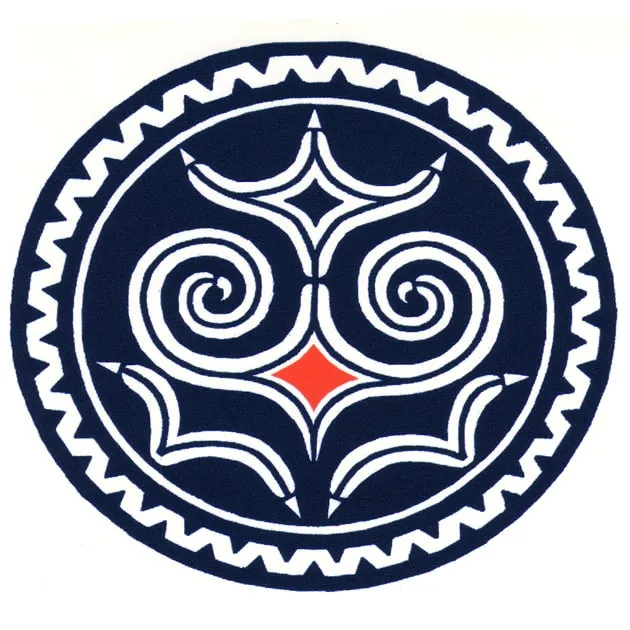
No official national flag exists for the Ainu people.
Symbolic designs often include
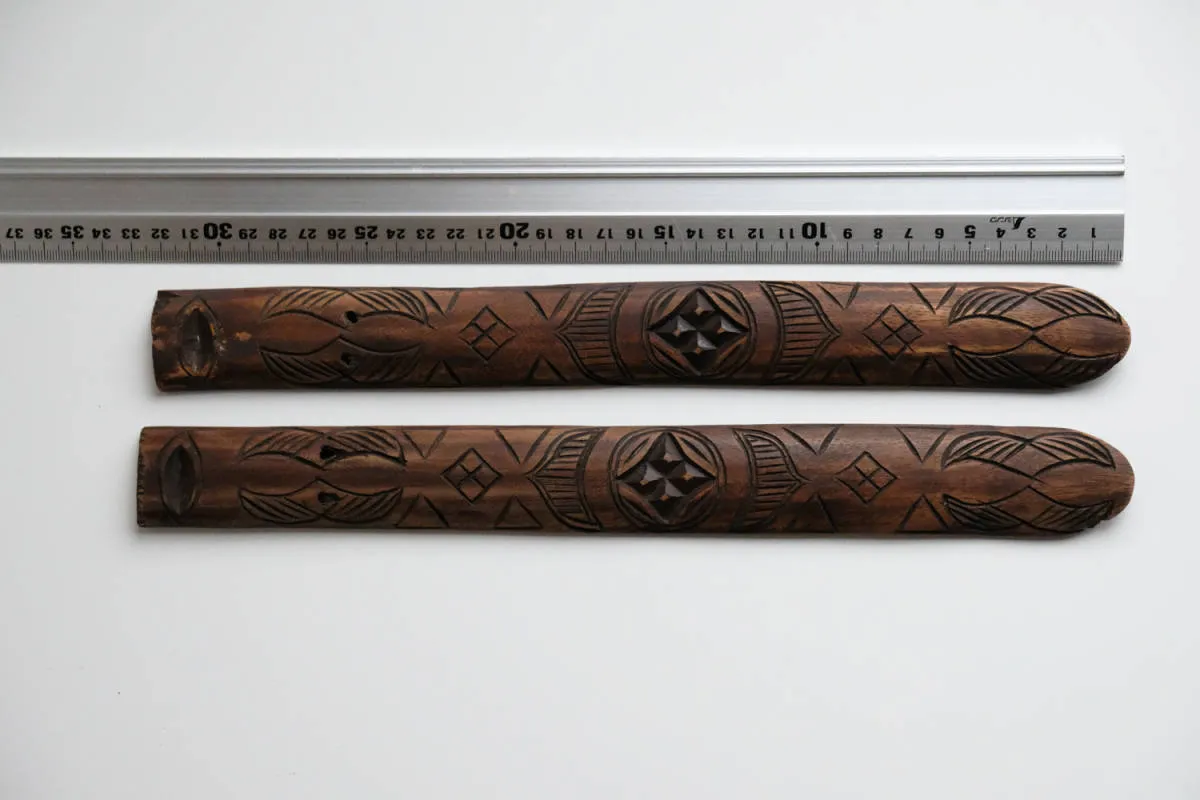
- Ainu patterns (Aiwushi, Moreu): Spiral and thorn motifs symbolizing protection from evil.
- Traditional clothing designs are sometimes used as symbolic emblems.
- Some modern groups use a blue, white, and red tricolor flag (inspired by historical Hokkaido symbols) as a unifying banner, but it is not officially recognized.
Traditional Ainu Symbols and Patterns
Ainu culture is widely recognized for its intricate symbolic patterns, which appear in textiles, clothing, wood carvings, and everyday objects. These designs were believed to offer spiritual protection and ward off evil spirits.
Two of the most famous Ainu motifs are Moreu (spiral patterns) and Ayus (thorn-like shapes). The spiral symbolizes continuity and protection, while the thorn motif is said to repel harmful forces.
These patterns are not merely decorative; they carry deep cultural and spiritual meaning, reflecting the Ainu worldview that nature, spirits, and humans are interconnected. Today, traditional Ainu designs are proudly displayed in cultural festivals, crafts, and modern creative works.
Language
The Ainu language is considered a language isolate, with no proven relation to any other language family. It once had multiple dialects across Hokkaido, Sakhalin, and the Kuril Islands.
Ainu Language Features
- Language Family: Isolate (no known relation to other languages).
- Phonetics:5 vowels (a, i, u, e, o), and relatively few consonants, similar to Japanese sounds.
- Writing:Traditionally an oral language; now written in Katakana or Roman letters.
Characteristics:
- Verb-centered language.
- Uses verb conjugation instead of particles.
- Many place names in Hokkaido derive from Ainu (e.g., "Sapporo" = dry land).
Writing System of the Ainu Language
Traditionally, the Ainu language was an oral language without a native writing system. Stories, epics, and cultural knowledge were passed down through generations by spoken word. These epic narratives, known as Yukar, played a central role in preserving Ainu history and worldview.
In modern times, the Ainu language has been written using modified Japanese katakana and, in academic contexts, the Latin alphabet. Special characters are sometimes added to represent sounds that do not exist in standard Japanese. These writing systems are primarily used for linguistic research, cultural preservation, and educational revitalization efforts.
Today, written Ainu appears in textbooks, cultural materials, museums, and language revitalization programs, reflecting ongoing efforts to preserve and restore this unique linguistic heritage.
Script
Traditionally oral, Ainu did not have a native writing system. Today, it is commonly written using katakana or Latin script for educational and preservation purposes.
Common Ainu Greetings and Phrases
Although the number of fluent speakers is limited today, several traditional Ainu expressions are still remembered and taught as part of cultural revitalization. Below are some well-known phrases:
| Expression | Meaning |
| Irankarapte | A traditional greeting meaning “Let me gently touch your heart.” |
| Iyairaikere | Thank you |
| Apunno an | Goodbye / See you again |
These expressions reflect the deeply relational and respectful nature of Ainu culture, where communication is closely connected to community, spirituality, and mutual care.
| English | Ainu Language | Pronunciation |
| Hello | Irawankepte | irawankepte |
|---|---|---|
| Good morning | Itak (lit. "word") | itak |
| Thank you | Irankarapte | irankarapte |
| Nice to meet you | Kar si kur (lit. "I care for you") | kar si kur |
| Good night | Un ku rupu (lit. "I will sleep") | un ku rupu |
| Delicious | Hecuy | hecuy |
| Fun/Enjoyable | Kimoci yakan (lit. "It feels good") | kimoci yakan |
Traditional Cultural Activities and Oral Tradition
Oral storytelling has long been at the heart of Ainu culture. Epic tales known as Yukar recount the deeds of heroes, the actions of deities, and the relationship between humans and nature. These narratives were often performed rhythmically and memorized with great precision.
Music, dance, and ceremonial rituals were also essential cultural practices. The Ainu spiritual tradition emphasizes respect for Kamuy (spiritual beings), who are believed to inhabit animals, plants, and natural elements.
Today, cultural preservation efforts continue through festivals, museum programs, language revitalization classes, and artistic expression. These activities ensure that Ainu identity and traditions remain vibrant in modern society.
Modern Revitalization and Cultural Preservation
In recent decades, efforts to revitalize Ainu culture and language have gained momentum. The Ainu were officially recognized as an Indigenous people of Japan in 2008, marking an important step toward cultural acknowledgment and protection.
Language revitalization programs, cultural workshops, and educational initiatives are now supported by local communities, academic institutions, and cultural organizations. Museums and cultural centers play a key role in preserving traditional knowledge, oral histories, and artistic practices.
Modern Ainu identity is expressed not only through tradition, but also through contemporary art, music, fashion, and digital media. These creative expressions connect ancestral heritage with modern life, ensuring that Ainu culture remains dynamic rather than frozen in the past.
Through these ongoing efforts, the Ainu people continue to reclaim their voice, strengthen cultural pride, and share their heritage with a global audience.
Language Origin
Ainu is a language isolate, meaning it has no confirmed genealogical relationship with other languages, although various hypotheses exist.
Access Guide
The currency of the Ainu people is the Japanese Yen (JPY, ¥).
The currency shown here is the official currency (Yen) of Japan, where the Ainu people mainly live. Different currencies may be used in other countries.
https://www.xe.com/currencyconverter/
Ainu Region
Example routes to the Ainu (Hokkaido/Sapporo/CTS) from major cities
| Departure City | Direct/Transit | Arrival Airport | Flight Time (approx.) | Reference Fare (one-way/round-trip, Economy) |
| Los Angeles | LA → Tokyo → Sapporo (New Chitose) | New Chitose (CTS) | About 14–17 hr | US$950–1,400 |
|---|---|---|---|---|
| New York | NY → Tokyo → Sapporo (New Chitose) | New Chitose (CTS) | About 15–19 hr | US$1,100–1,600 |
| London | London → Tokyo → Sapporo (New Chitose) | New Chitose (CTS) | About 15–20 hr | £850–1,400 |
| Tokyo | Tokyo → Sapporo (New Chitose) | New Chitose (CTS) | About 1 hr 45 min | ¥10,000–30,000 |
| Sydney | Sydney → Tokyo → Sapporo (New Chitose) | New Chitose (CTS) | About 13–16 hr | A$1,100–1,600 |
| Hong Kong | Hong Kong → Tokyo → Sapporo (New Chitose) | New Chitose (CTS) | About 8–11 hr | HK$4,500–6,800 |
| Shanghai | Shanghai → Tokyo → Sapporo (New Chitose) | New Chitose (CTS) | About 7–10 hr | CNY2,800–4,000 |
| Singapore | Singapore → Tokyo → Sapporo (New Chitose) | New Chitose (CTS) | About 11–15 hr | S$750–1,200 |
Traditional Games
The Ainu people have long enjoyed a variety of traditional games that reflect their deep connection to nature and community. These games were not only for fun but also helped develop physical skills and social bonds important for their hunting lifestyle.
Games like "Ikari-pa" (a ring toss using wood) and "Ukouk" (a bow-and-arrow game) reflect Ainu craftsmanship and nature-based play. Many toys were made using wood and animal bones.
1. Ikupasuy Throwing (Ikupasuy Ape)
- Description:Throwing a wooden prayer stick called "Ikupasuy" as far as possible.
- Purpose:To train arm strength and coordination useful for hunting.
- Cultural Context:The Ikupasuy is a sacred object used in rituals, and handling it in games teaches respect for nature and the divine.
2.Yukar Karuta (Storytelling Game)
- Description:Participants take turns reciting lines from Yukar (epic poems), continuing the story in rhythm.
- Purpose:Enhances memory and language skills.
- Cultural Context:A way to pass down oral traditions and legends through playful interaction.
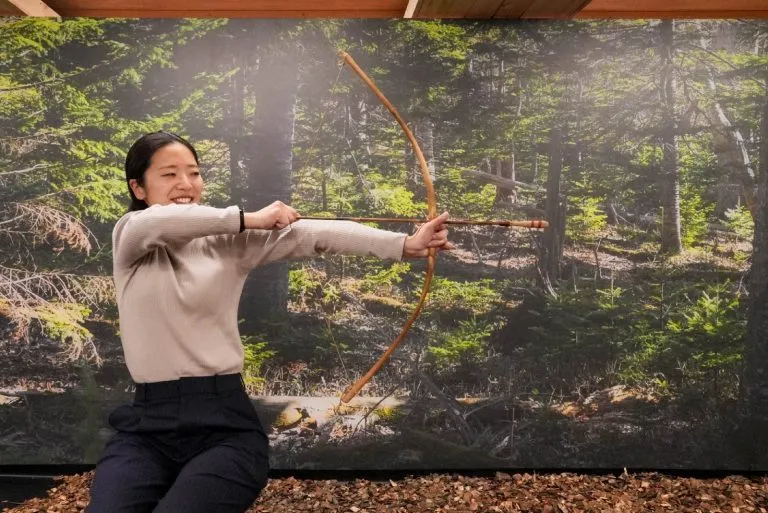
3.Bow and Arrow Play
- Description:Using small bows and arrows to hit targets.
- Purpose:Develops aiming and focus, essential for hunters.
- Cultural Context: Seen as a rite of passage for boys learning to become hunters.
4.Poro Rimse (Circle Dance Game)
- Description:Dancing in a circle while chanting and clapping in rhythm.
- Purpose:Builds a sense of unity and rhythm.
- Cultural Context:Celebrated during festivals and harvests to share joy and blessings.
Introduction video
Modern Revival and Experiences
- Workshops and cultural programs at places like Upopoy offer hands-on experiences of these traditional games.
- Some schools introduce Ainu games in cultural education, especially bow and arrow activities and storytelling.
Additional Notes
- Ainu games emphasize "experience," often taking place outdoors in harmony with nature.
- Through play, children learned respect for the environment and the importance of community cooperation.